New
Exclusive

Table of contents
Buried beneath volcanic ash and pumice for nearly 1,700 years, Pompeii emerges as the world’s most extraordinary archaeological treasure, where an entire Roman city remains preserved in stunning detail from the catastrophic eruption of Mount Vesuvius in 79 AD. This ancient metropolis near Naples offers visitors unprecedented glimpses into daily Roman life through remarkably intact buildings, streets, shops, and homes that showcase the sophistication of Roman urban planning, architecture, and social organisation during the height of the Empire. The volcanic devastation that destroyed Pompeii also created perfect preservation conditions, protecting organic materials, wall paintings, mosaics, and even human forms through volcanic casts that provide haunting testimony to the disaster’s human cost.
Modern Pompeii attracts over three million visitors annually who come to explore streets where Roman citizens walked two millennia ago, examining bakeries with bread still in ovens, taverns with amphorae embedded in marble counters, and luxurious villas adorned with frescoes that demonstrate the artistic achievements of ancient Rome. UNESCO World Heritage protection ensures careful preservation of this irreplaceable archaeological site, while ongoing excavations continue to reveal new areas and artefacts that enhance understanding of Roman civilisation. The site’s proximity to Naples and excellent transport connections make Pompeii accessible for day trips, while the vast archaeological area requires careful planning to maximise limited visiting time and navigate the extensive ruins efficiently.

Experience the perfect blend of ancient history and coastal splendour through this flexible tour based in the charming town of Sorrento, renowned for its sweeping panoramic views of the sparkling Tyrrhenian Sea. Beginning with comfortable accommodation at carefully selected hotels, including Hotel Ascot, Eliseo Park, or Villa Crawford, travellers enjoy half-board dining while exploring the region’s most treasured destinations through expertly guided excursions that bring both history and natural beauty to life.
The archaeological highlight unfolds at Pompeii, where priority entry ensures seamless access to this remarkable site preserved in volcanic ash since 79 AD. Expert history guides lead immersive two-hour walking tours along ancient "cardines" and "decumani", revealing Roman daily life through magnificently preserved frescoes, baths, streets, bakeries, and forums. The Sorrento street food experience showcases local culinary traditions, while longer stays include comprehensive Amalfi Coast tours visiting famous Positano, the ancient Maritime Republic of Amalfi, and breathtaking Ravello.
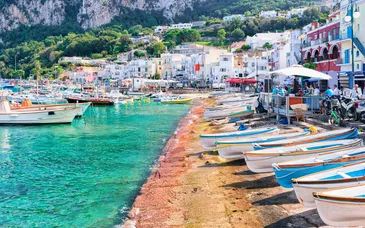
Extended itineraries feature guided boat trips to enchanting Capri, complete with opportunities to swim in the crystal-clear blue waters of the Gulf while discovering the island’s traditional villages, narrow streets, and magnificent Mediterranean vistas. The tour’s flexible duration options, from 3 to 7 nights, allow travellers to customise their experience, with free days providing opportunities to explore Naples, relax on magnificent beaches, or perfect their Italian tan while sampling the region’s renowned cuisine and refreshing gelato.
What we love: The exceptional flexibility of choosing tour durations from 3 to 7 nights, combined with comprehensive inclusions featuring priority Pompeii entrance, authentic street food experiences, complimentary half-board upgrades, and perfectly positioned Sorrento accommodation that serves as an ideal base for exploring the entire region’s cultural and natural treasures.

Discover the mythical wonders of Pompeii combined with the dramatic natural beauty of Mount Vesuvius through this comprehensive tour featuring luxury 5-star accommodation at the Grand Hotel La Pace. The adventure begins with an unforgettable day exploring both the archaeological site of Pompeii and the imposing volcano that forever changed its destiny, creating a powerful narrative that connects ancient tragedy with geological magnificence through expert licensed guide commentary.
The Pompeii experience features priority entrance, avoiding lengthy queues, followed by immersive two-hour guided walking tours that bring Roman prosperity back to life through remarkably preserved infrastructure saved by volcanic ash and pumice. The Mount Vesuvius ascent takes travellers to 1,000 metres elevation, from where the crater’s edge offers unmatched panoramic views of the Gulf of Naples and surrounding landscapes, creating an unforgettable perspective on this legendary volcano’s continuing presence.
Sorrento’s charming streets come alive during intimate small-group walking tours through Tasso Square, the Sant’Antonino Church, San Francesco Cloister, and the ancient Valley of the Mills. Extended stays feature comprehensive Amalfi Coast exploration, visiting Positano’s narrow streets, Amalfi’s magnificent cathedral and cloister, plus Ravello’s famous Villa Rufolo with its stunning sea-overlooking gardens. Culinary highlights include authentic lemon-themed lunches at the historic O’Schizzariello restaurant, featuring handmade tagliolini al limone and traditional delizia al limone desserts.
What we love: The exceptional combination of luxury 5-star accommodation with comprehensive historical exploration, enhanced by the unique opportunity to climb Mount Vesuvius to its crater’s edge, authentic lemon-themed dining experiences, and optional activities including the famous Path of the Gods hiking and Italian cooking classes that celebrate the region’s culinary heritage.

Immerse yourself in the glitz and glamour of the legendary Amalfi Coast through this restorative stay in picturesque Sorrento, perfectly positioned to showcase sweeping sea views and luscious lemon groves that have captivated visitors for centuries. Comfortable accommodation at the 4-star Hotel Parco del Sole provides an excellent base for discovering the Campania region’s charms through carefully planned walking tours and daily excursions that conclude with exceptional local cuisine and renowned regional wines.
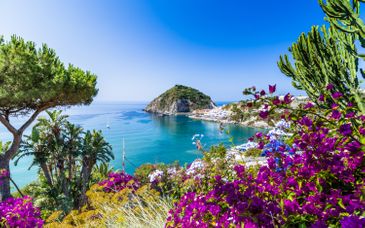
The comprehensive Amalfi Coast tour departing from Sorrento features scenic drives with local guides revealing incredible landscapes and beautiful towns perched above glittering seas. Visits include famous Positano, with its colourful houses tumbling towards sparkling waters, the ancient Maritime Republic of Amalfi showcasing centuries of maritime heritage, and breathtaking Ravello suspended between sky and sea above the Gulf of Salerno, creating unforgettable panoramic vistas.
Archaeological adventures at Pompeii bring ancient Roman civilisation back to life through expert two-hour guided walking tours, revealing how lava and lapilli preserved the city’s infrastructure and artefacts in incredible detail following the 79 AD eruption. Extended stays feature guided Capri island boat tours combining local expertise with fabulous sea experiences, including refreshing swims in the sparkling blue Gulf waters while exploring traditional villages, narrow streets, and magnificent Mediterranean viewpoints that have inspired artists and writers for generations.
What we love: The perfect combination of coastal glamour and historical discovery, enhanced by comfortable 4-star accommodation, half-board dining including drinks, worry-free island transport for Capri excursions, and the flexibility to choose tour durations that perfectly match individual preferences while experiencing the very best of this UNESCO-listed coastline’s natural beauty and cultural treasures.
Professional archaeological tours provide essential context for understanding Pompeii’s significance through expert guides who explain Roman urban planning, social hierarchies, and daily life customs revealed through exceptionally preserved architecture and artefacts. These comprehensive explorations typically begin at the main entrance, where orientation maps and site layouts help visitors navigate the 66-hectare archaeological area that encompasses residential districts, commercial zones, public buildings, and religious complexes that formed a complete Roman city. Licensed guides possess extensive knowledge of recent archaeological discoveries, ongoing research projects, and historical interpretations that bring ancient ruins to life through detailed explanations of how Romans lived, worked, and socialised in this prosperous provincial town.
The Forum represents Pompeii’s political and commercial heart, where well-preserved columns, basilicas, and temple foundations demonstrate Roman civic architecture while revealing the city’s administrative functions and religious practices. This rectangular public square served as the centre of political discourse, commercial transactions, and social gatherings, where citizens conducted business, attended religious ceremonies, and participated in civic life that defined Roman urban culture. Surrounding buildings include the Temple of Apollo, the Basilica used for legal proceedings, and market structures that showcase the sophisticated economic systems supporting Roman urban populations through trade networks extending across the Mediterranean.
Residential areas reveal stark contrasts between modest homes and luxurious villas that demonstrate Roman social stratification through architectural differences, decorative elements, and room functions that reflect varying economic status and lifestyle preferences. The House of the Vettii showcases wealthy merchant prosperity through elaborate frescoes, garden courtyards, and sophisticated domestic arrangements, while smaller homes reveal middle-class Roman life through more modest but well-designed living spaces. These residential explorations provide intimate insights into Roman family structures, domestic customs, and daily routines preserved through furniture arrangements, cooking facilities, and personal belongings that survived the volcanic catastrophe.

Priority access tours eliminate lengthy queue waiting times that can extend several hours during peak tourist seasons, particularly summer months when visitor numbers reach maximum capacity and entrance delays significantly reduce actual site exploration time. These premium tour options include pre-purchased entrance tickets combined with professional guide services that provide immediate site access while ensuring comprehensive coverage of major attractions within time constraints imposed by large crowds and limited opening hours. Skip-the-line arrangements prove especially valuable during Italian school holidays, international tourist peaks, and weekend periods when independent visitors often experience extensive delays before entering the archaeological area.
Timed entry systems implemented by site management require advance booking for guaranteed admission while helping control visitor flow and preserve fragile archaeological structures from overcrowding damage. Professional tour operators maintain allocation agreements that secure priority slots for group bookings while providing flexibility for individual travellers seeking guaranteed access without advance planning stress. These arrangements often include backup plans for weather-related closures, unexpected site maintenance, or capacity restrictions that might otherwise result in denied admission for independent visitors arriving without confirmed reservations.
Early morning and late afternoon tours offer optimal visiting conditions through reduced crowd densities, better photographic lighting, and more intimate experiences with ancient ruins that become overwhelmed during midday peak hours. Professional guides adjust tour pacing and route selection based on real-time crowd conditions while maintaining comprehensive coverage of essential sites, including the Forum, amphitheatre, brothel, bakeries, and major villa complexes. These strategic timing approaches enhance visitor satisfaction while supporting site preservation through more manageable visitor distribution throughout daily operating hours.
Vesuvius National Park provides dramatic geological context for understanding the volcanic forces that both destroyed and preserved Pompeii through guided ascents of the active volcano, whose 1944 eruption marked its most recent major activity. The crater rim hike, accessible through moderate walking trails that gain approximately 200 metres elevation over well-maintained paths, offers spectacular panoramic views across the Bay of Naples while providing close examination of volcanic features, including fumaroles, lava formations, and the impressive crater that measures 600 metres in diameter. Professional volcanology guides explain eruption mechanisms, geological history, and ongoing monitoring systems that track volcanic activity for early warning purposes.
Combined Pompeii-Vesuvius tours maximise regional exploration through efficient transport between sites while providing comprehensive understanding of the geological and historical relationship between the volcano and the ancient city. These full-day excursions typically allocate morning hours for Pompeii archaeological exploration followed by afternoon Vesuvius ascent, when weather conditions often provide clearer visibility for summit views and photography. Professional tour operators coordinate timing, transport, and guide services to ensure seamless transitions between sites while accommodating different physical fitness levels and mobility requirements for volcano hiking activities.
Educational programmes combine archaeological interpretation with geological instruction to demonstrate how volcanic activity shaped regional landscape, provided fertile agricultural soils that supported ancient settlements, and continues influencing modern development patterns around Vesuvius. These multidisciplinary approaches appeal to visitors seeking comprehensive understanding of natural and cultural heritage while providing scientific context for appreciating both the creative and destructive forces of volcanic activity. Advanced booking requirements for Vesuvius access coordinate with Pompeii tour scheduling to ensure optimal daily itineraries that maximise both archaeological and geological learning opportunities.
Herculaneum presents remarkable contrasts to Pompeii through superior preservation of organic materials, wooden structures, and household items that survived burial under different volcanic deposits that created oxygen-free conditions ideal for preserving materials that decomposed at Pompeii. This smaller but extraordinarily well-preserved ancient town offers intimate exploration opportunities through narrower streets, better-maintained buildings, and exceptional examples of Roman domestic architecture, including multi-storey houses with intact wooden balconies, furniture fragments, and even scrolls that provide direct access to Roman literature and daily documentation.
The Villa of the Papyri represents one of archaeology’s most significant discoveries, where an extensive library of over 1,800 papyrus scrolls provides unprecedented access to ancient Greek and Roman literature, philosophy, and scientific texts that expand knowledge of classical intellectual achievements. Modern conservation techniques enable ongoing research into these fragile documents while visitor programmes demonstrate preservation methods and reveal selected scroll contents that illustrate the sophisticated literary culture of wealthy Roman society. The villa’s elaborate architecture, garden designs, and artistic decorations showcase luxury living standards among Rome’s intellectual elite while providing insights into private education, scholarly patronage, and cultural exchange networks.
Bay of Naples touring combines multiple archaeological sites with scenic coastal drives that reveal the region’s continuing volcanic influence through landscape formations, thermal springs, and geological features that attracted Roman settlement while providing modern tourist attractions. These comprehensive regional tours often include stops at additional archaeological sites, traditional fishing villages, and viewpoints that demonstrate the geographic relationships between ancient settlements and natural features that influenced historical development patterns. Professional regional guides provide geological, historical, and cultural interpretation that connects ancient Roman achievements with contemporary southern Italian culture and ongoing archaeological research.

Personalised archaeological tours provide flexibility for adjusting itineraries, pacing, and focus areas according to specific interests, including Roman architecture, ancient art, social history, or archaeological methodology, while accommodating varying physical abilities, time constraints, and learning preferences. Professional private guides offer specialised expertise in particular aspects of Roman culture while providing intimate group experiences that enable detailed questioning, extended examination of specific features, and customised routes that maximise personal interests rather than following standard group tour schedules designed for general audiences.
Family-oriented private tours adapt content delivery and activity selection for children while maintaining educational value through interactive elements, storytelling techniques, and hands-on learning opportunities that engage younger visitors with ancient history concepts. These specialised programmes often include archaeological activity booklets, treasure hunt elements, and age-appropriate explanations that make Roman history accessible and exciting for children while providing comprehensive information for accompanying adult family members. Flexible scheduling accommodates family meal times, rest breaks, and varying attention spans that require different approaches from standard adult-oriented group tours.
Photography-focused private tours cater to serious photographers seeking optimal lighting conditions, crowd-free compositions, and extended time at photogenic locations while providing expert guidance on archaeological regulations governing photography equipment, tripod usage, and commercial photography permissions. These specialised tours often include early morning or late afternoon access, when lighting conditions enhance architectural details and atmospheric effects while avoiding peak visitor crowds that complicate photography efforts. Professional photography guides combine archaeological knowledge with technical photography expertise to maximise both artistic and documentary photography opportunities throughout the ancient city.
Advanced digital technology enhances Pompeii exploration through virtual reality headsets that recreate ancient buildings in their original splendour, complete with furnishings, decorations, and human activity that demonstrate how Roman spaces functioned during daily life before the eruption. These immersive experiences overlay digital reconstructions onto existing archaeological remains, enabling visitors to visualise complete buildings, understand spatial relationships, and appreciate decorative schemes that time and volcanic damage have obscured. Professional technology guides operate VR equipment while providing archaeological interpretation that connects digital reconstructions with physical evidence visible throughout the site.
Augmented reality applications, accessible through smartphones and tablets, provide on-demand information about specific buildings, artefacts, and historical contexts while visitors explore independently or supplement guided tour experiences with additional digital content. These interactive tools often include 3D models, historical timelines, and comparative images that demonstrate how archaeological understanding has evolved through ongoing research and new discoveries. Digital content receives regular updates reflecting current archaeological interpretations while providing multiple language options that make Pompeii accessible to international visitors regardless of tour guide language availability.
Educational institutions collaborate with site management to develop sophisticated digital learning tools that support academic study while creating engaging public education resources that extend Pompeii’s educational impact beyond physical site visits. These programmes often include virtual classroom visits, online learning modules, and digital archives that provide global access to Pompeii’s archaeological treasures while supporting conservation efforts through reduced physical visitor pressure. Advanced technologies continue to develop new applications for archaeological interpretation while preserving ancient sites for future generations through innovative documentation and presentation methods.
After-hours access programmes provide extraordinary opportunities for experiencing Pompeii’s ancient atmosphere without crowds while enjoying special lighting effects that create a magical ambience throughout archaeological areas normally closed after standard visiting hours. These exclusive evening tours typically feature guided exploration of major sites, including the Forum, amphitheatre, and Villa of the Mysteries, while providing intimate group experiences that emphasise contemplative appreciation of ancient Roman achievements under starlit skies. Professional guides adapt standard interpretations for evening conditions while highlighting architectural details and atmospheric effects enhanced by artificial lighting systems designed to showcase archaeological features safely after dark.
Special event programming coordinates with astronomical phenomena, cultural celebrations, and archaeological anniversaries to create unique visiting experiences that combine historical education with memorable personal experiences rarely available to general visitors. These programmes might include guided tours during meteor showers that Romans would have witnessed, harvest festivals that recreate ancient agricultural celebrations, or archaeological demonstration events that showcase Roman construction techniques and daily life activities. Advance reservation requirements ensure limited group sizes that maintain exclusive access while supporting site preservation through controlled visitor impact during sensitive after-hours periods.
Seasonal evening programmes take advantage of southern Italian climate conditions that provide comfortable outdoor exploration opportunities during summer months when daytime temperatures often exceed comfortable touring conditions. These programmes typically operate during spring and autumn periods when weather conditions optimise outdoor evening activities while providing alternatives for visitors whose schedules preclude standard daytime touring options. Professional lighting design ensures safe navigation throughout archaeological areas while creating dramatic visual effects that enhance appreciation of Roman architectural achievements and artistic accomplishments preserved within this extraordinary ancient city.