
Jan
min : 1°C
max : 10°C
We love —
- See Osaka, Kyoto, Takayama, Tokyo and even Hiroshima on this self guided three or four-star journey throughout Japan!
- You'll discover the contrast of culture and architecture on your adventure and it is simply breathtaking to behold!
- With your JapanRail Pass included in your stay, as well as daily breakfast, you have the freedom to explore this country at your own leisure!
Your Destinations —
Osaka
Hiroshima
Kyoto
If you go by an old shōtengai (shopping street) you can admire the ancient speciality shops: tofu sellers, fishmongers, pickle vendors and tea merchants.
Takayama
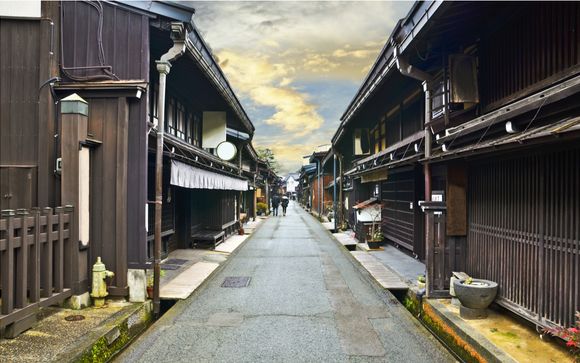
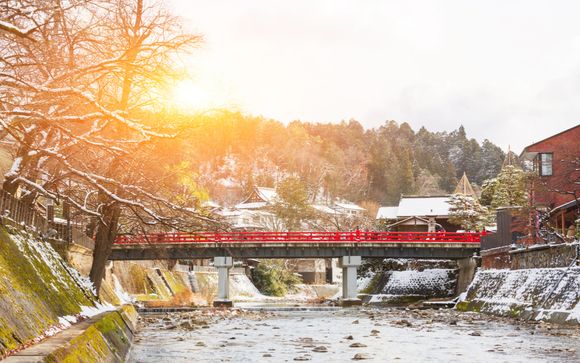
Known as 'Little Kyoto', visit the three main streets of the Sanmachi-Suji district. Offering the soothing sounds of water, nearby or in the background, wander through the contrasting dull gray of the alleys and the dark brown of private homes and inns, and visit one of many sake breweries. Don't miss the Yoshijima-ke Heritage House famed for serving as a residence and sake brewery, and Kusakabe Heritage House formally owned by the Kusakabe family, successful money lenders.
Tokyo
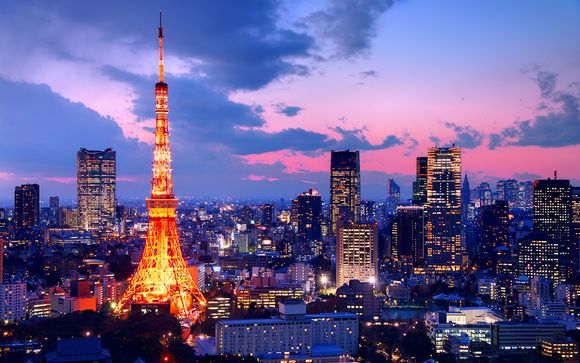
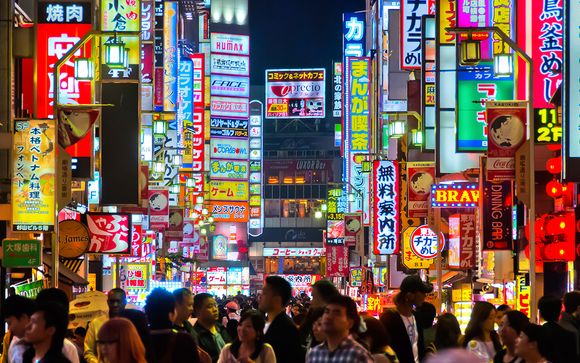
Despite its love affair with manga pop culture, fashion, high-tech trends and conspicuous consumption, below the surface is a city that has its roots in ancient heritage. Shinto shrines and Buddhist temples stand close to skyscrapers as a reminder of a more contemplative time and at the heart of the hyperactive centre lies the serene Imperial Palace, the home of the ruling emperor that provides a tangible link to the city’s historical past.
Behind the shopping, entertainment and commercial Emporia can be found quaint wooden houses, private gardens with meticulously clipped bonsai trees and the Zen-like calm of the Hamarikyu Gardens. Discover the fascinating and exquisite culture of Japan where the ancient and modern worlds collide. The city’s reputation as a mega-expensive metropolis is ill-conceived and visitors can take advantage of inexpensive izakaya bars and neighbourhood cafes that serve delicious noodles and rice dishes.
Our Offers —
8 nights/9 days Japan Free & Easy Tour in 3* or 4* hotels
OR
10 nights/11 days Japan Free & Easy Tour in 3* or 4* hotels
OR
12 nights/13 days Japan Free & Easy Tour in 3* or 4* hotels
Your Itinerary In Brief —
8 nights/9 days Tour
Day 1: Arrive in Osaka
Day 2: Osaka - Kyoto
Day 3: Kyoto
Day 4: Kyoto - Takayama
Day 5: Takayama - Tokyo
Day 6: Tokyo
Day 7: Tokyo
Day 8: Tokyo
Day 9: Depart from Tokyo
10 nights/11 days Tour
Day 1: Arrive in Osaka
Day 2: Osaka - Hiroshima
Day 3: Hiroshima
Day 4: Hiroshima - Kyoto
Day 5: Kyoto
Day 6: Kyoto - Takayama
Day 7: Takayama - Tokyo
Day 8: Tokyo
Day 9: Tokyo
Day 10: Tokyo
Day 11: Depart from Tokyo
12 nights/13 days Tour
Day 1: Arrive in Osaka
Day 2: Osaka
Day 3: Osaka - Hiroshima
Day 4: Hiroshima - Kyoto
Day 5: Kyoto
Day 6: Kyoto - Takayama
Day 7: Takayama - Tokyo
Day 8: Tokyo
Day 9: Tokyo
Day 10: Tokyo
Day 11: Tokyo
Day 12: Tokyo
Day 13: Depart from Tokyo
Your Tour Itinerary —
Each of these tours allows you to explore Japan at your own pace. With an included Japan Rail Pass, and accommodation with breakfast pre-organised for your peace of mind, you get to design the itinerary of your adventure. Below you will find our recommendations of things to do and place to visit. Pick and choose what you would like discover and decide your own journey!
Day 1 - Day 2: Osaka during your 10 nights / 11 days tour
Day 1 - Day 3: Osaka during your 12 nights / 13 days tour
Spend time at leisure exploring the city of Osaka
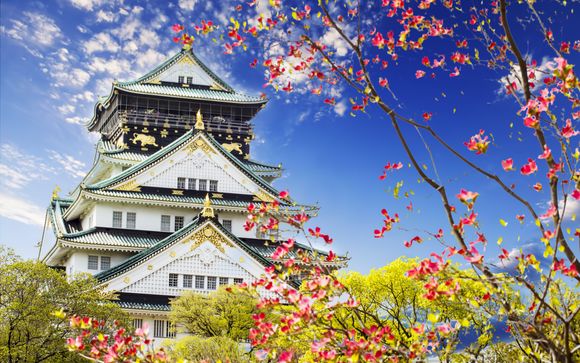
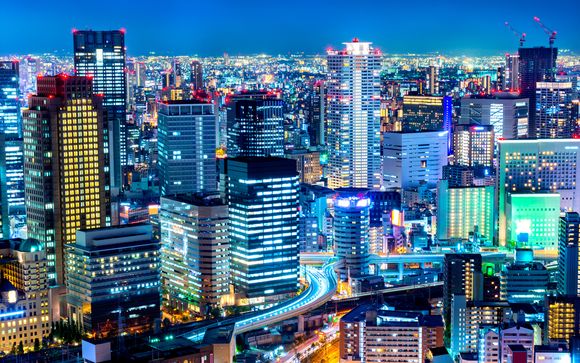
Discover its castle and aquarium, but also its rich gastronomic and cultural districts, which all boast an individual atmosphere. Osaka Castle, once the largest in Japan, was built in 1586 by Toyotomi Hideyoshi. The five-storey fortress is a copy of the original building and contains a large number of documents and artifacts whose history is directly related to the Toyotomi family and Osaka from the past. Minami, the southern part of the city, is home to Osaka's traditional neighborhoods: Dotombori, which symbolises the city's festive and culinary reputation with its many restaurants and bars, Shinsaibashi, a fashion trendsetter like America-mura, or Nipponbashi and its many theatres.
Day 3 - Day 4: Hiroshima during your 12 nights / 13 days tour
Not included on 8 nights / 9 days tour
Spend time at leisure exploring Hiroshima, and Miyajima if you have the time.
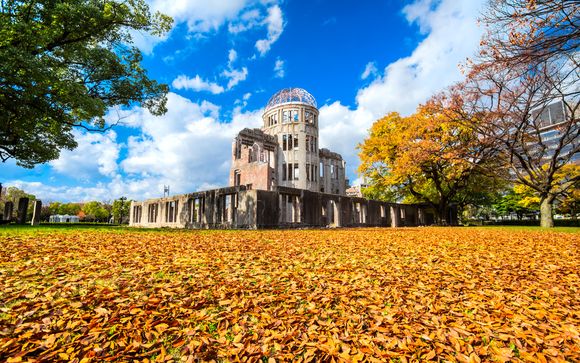
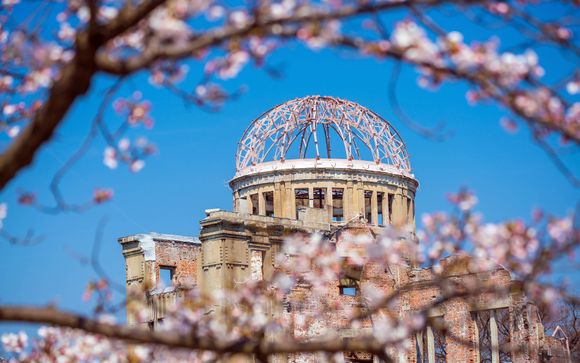
Hiroshima is marked by history and today symbolises peace. No building survived the blast of the atomic bomb of 1945, except for the dome of Genbaku, a remnant of the former exhibition palace. Around it was built the Park of the Peace Memorial in 1954. This includes the dome and a monument commemorating the victims of the bomb. Just opposite is the Peace Memorial Museum. To get there, take the tram from Hiroshima Station to Genbaku-Dome-Mae.
During your first visit to Hiroshima, here are some other places to visit. The city was indeed a dynamic centre at the time of Edo. A 10-minute tram ride from Hiroshima Station (Kamiya-cho stop) and a 15-minute walk, Hiroshima Castle was declared a national treasure in 1931 before being destroyed and rebuilt in 1958.
The Shukkeien Garden will delight walkers in search of green space. Located just 900 metres from Hiroshima Station, this 4-hectare garden was commissioned in the early 17th century by the Lord of Hiroshima, Nagaakira Asano. Its layout is inspired by Chinese Lake Xihu (west of Hangzhou) but also is home to many miniature landscapes. In the spring, cherry and plum trees delight visitors.
Easily accessible with your Japan Rail Pass, board a train to Miyajimaguchi Port. From there, take a ferry to the sacred island of Miyajima.
Known as the "Island of Gods on the beautiful Seto Inland Sea", this shrine has long been a sacred place, since the sanctuary of Itsukushima was established there in 593 (the buildings date from the 12th century). This sanctuary, dedicated to the guardian goddess of the seas, has the particularity of being partially built on the water, with buildings on stilts and its torii a few tens of metres offshore.
The beautiful landscape of the island, its stunning beaches and intruiging hiking trails make it a popular destination in summer. But autumn or spring also have great charms, be it with flamboyant maple trees or cherry blossoms. It is for all these reasons that the island of Miyajima has been classified as World Heritage by UNESCO. Tour the island and Itsukushima shrine.
The construction of the shrine on stilts and pontoons is due to the sacred status of the island. Visitors had no right to land on the island; they had to arrive by boat, pass under the floating torii and dock on the pontoons. A Noh theatre stage, also on stilts, is located near the temple. Nowadays the island still preserves its sacred status, and it is forbidden to be born there or die there.
Day 4 - Day 6: Kyoto during your 10 nights / 11 days tour
Day 4 - Day 6: Kyoto during your 12 nights / 13 days tour
Spend time at leisure exploring the city of Kyoto.
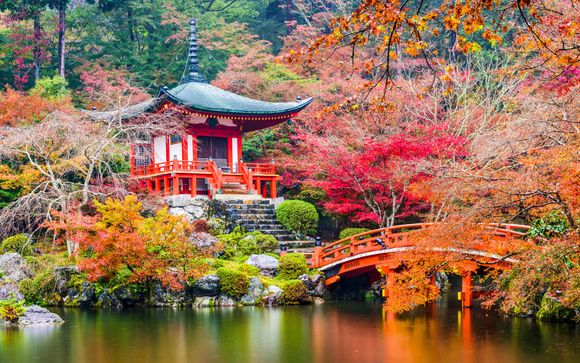
Kyoto was the capital of Japan for more than a thousand years, from 794 to the restoration of Meiji in 1868, where the capital was transferred to Tokyo. Over the past centuries, this city has become the excelled in the field of arts, culture, religion and ideas. Spared by the bombings in the Second World War, many traditional houses, machiya (Japanese townhouses) are still standing.
Head north-east of Kyoto to explore Kinkaku-ji.Kinkaku-ji or "Golden Pavilion" is one of Kyoto's jewels. Entirely covered with gold, except for the ground floor, its silhouette is reflected in the pond that borders it. The walk along the lake offers magnificent views of the pavilion, which can only be seen from the outside. Built in 1397 by the shogun Ashikaga for his personal use, the Golden Pavilion was transformed into a Zen temple after his death. Destroyed by a number of fires, the current building dates from 1955 and is a UNESCO World Heritage Site.
Continue with a visit to Ryōan-ji temple. The Ryōanji temple is famous for its karensansui or rock garden, certainly the most beautiful Japan Zen movements inspired by the artist Soami (1455-1525). The garden stretches on a flat surface covered with white pebbles and is surrounded of earth walls. The garden contains 15 rocks arranged on the surface in 3 groups, there are no flowers but moss beds.
Then, why not visit Nishiki Market? This is the most famous market in the city of Kyoto, parallel to Shijo Avenue and accessible from Shijo Station (Karasuma Line) or Kawaramachi Station (Hankyu Line). This market extends over 400m of galleries and has an abbundance of cuisine to choose from.
Next, visit Nijō Castle. Built in 1603 as a residence for Tokugawa shoguns while in Kyoto, this castle is a reflection of the power of those who ruled Japan for more than 200 years. There are several beautiful gardens, and inside the castle are many works of art. End your day by going to Gion Ward. Here you will find beautiful streets, with typical Japanese architecture present in the houses, where the elegant maiko (apprentice geisha) live.
Not far away, the Yasaka Shrine is waiting for you to finish your day. Also known as "Gion Sanctuary", the Yasaka Shrine is a Shinto shrine originally built in the year 656 for the syncretic Gozu Tennô deity and rebuilt from 1654 to 1664 in the Gion-zukuri style. This shrine is now dedicated to the Kami Susa-no-o, God of the Sea. This shrine is intimately linked to the history of Gion district in Kyoto.
Take some to uncover Kyoto's Imperial Palace. The Kyoto Imperial Palace, located in Kyoto Gyoen Park, has been destroyed several times by many fires. Its current buildings date from 1855. It was the residence of the imperial family until the relocation of the capital to Tokyo in 1869. Following your visit, see the Heian-jingu Shrine. This sanctuary was erected in 1895 to commemorate the eleventh centenary of the founding of the ancient capital. It replicates on a reduced scale the first Imperial Palace built in 794. Its gardens and walks are famous for cherry trees in April, iris and lotus in early summer. On October 22nd, the Jidai Matsuri or Festival of the Elder Age ends.
Afterwards, you should visit the Sanjusangendo temple. This temple, rebuilt in 1266, is famous for its wooden statue of Bodhisattva Kannon with eleven faces, and considered a National Treasure. Surrounded by 28 statues of its guardians and a thousand and one smaller ones reproducing the same bodhisattva, this monument is also home to the longest wooden building in the world (at 118 metres long).
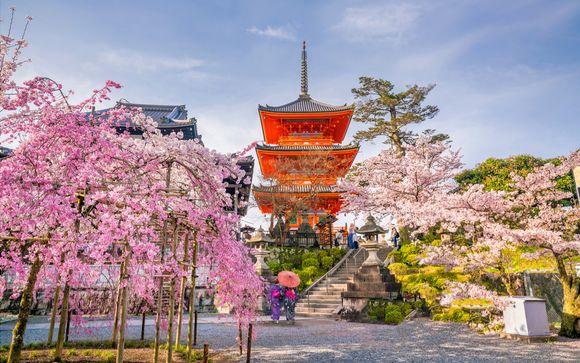
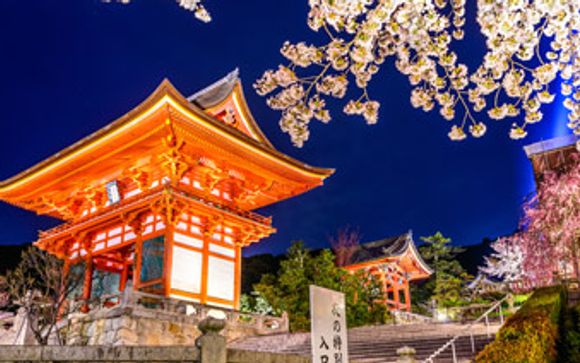
To end the day in style, head to Kiyomizudera temple. Founded in the late 8th century, Kiyomizudera Temple is located at the foot of Higashiyama Hill. The main building, considered a National Treasure, was rebuilt in 1633 by the Tokugawa shogunate. Its wooden terrace, supported by 139 giant pilings 15m high, overlooks a ravine and offers a magnificent panorama of the city.
Day 6 - Day 7: Takayama during your 10 nights / 11 days tour
Day 6 - Day 7: Takayama during your 12 nights / 13 days tour
Spend time at leisure exploring the city of Takayama.
Takayama’s atmospheric streets, museums and folkcrafts make it a great place to discover rural Japan. It is also a superb base for exploring the surrounding Hida district and National Park. Uncover the Sanmachi-suji district, the Shingon-sect Buddhist temple of Hida Kokubun-ji, as well as the heritage houses of Yoshijima and Kusakabe. A visit to Takayama should include stopping at the main hall dedicated to the Takayama Matsuri, a festival held twice a year in spring in autumn.
Further sightseeing in Takayama could include Hida no Sato, an open-air museum of traditional architecture and crafts. We also recommend is Furukawa, a lovely village less than 20 minutes from Takayama.
Day 7 - Day 11: Tokyo during your 10 nights / 11 days tour
Day 7 - Day 13: Tokyo during your 12 nights / 13 days tour
Spend time at leisure exploring the city of Tokyo
The district of Asakusa, along the Sumida River, will immerse you in the unique and traditional universe of Tokyo where still lives the spirit of "old Edo". Its central point is the Sensoji Temple or Asakusa Kannon. Leading here, you will find the shopping street "Nakamise Dori", where walkers will find many shops selling kimonos and all kinds of traditional items. This district is a popular outlet for Tokyoites, with its many cinemas, theatres and other entertainment options, especially its countless restaurants.
Head to the district of Akihabara, the most famous in the world for its electronic, computer and electrical supplies. It is said that any electronic device can be found there and the products can be bought at reasonable prices. Try your hand at haggling to get your hands on the newest gagets, if not many shops have a tax refund service. There are more and more manga and animated stores emerging in Akihabara, which take the place of electronics stores. It is therefore in this neighborhood that you'll be able to release your inner Anime.
Visit to the Roppongi district. This is the trendy nightlife area of Tokyo offering cool restaurants, bars and nightclubs. You will also find a number of embassies here. The busy Roppongi crossroad just outside the subway station is fascinating a sight that is not to be missed. Visit the shopping streets of Azabu Juban, allowing you to savour the atmosphere of old Tokyo, then discover the symbolic Tokyo Tower. At 333 metres high, this tower holds within it the OnePiece theme park.
Roppongi Hills is just a short walk from Roppongi Station. This shopping complex offers a variety of cultural activities, over 230 shops, a cinema complex, a hotel, a TV station, offices and apartments, as well as green and open spaces to enjoy. The top floor of the Mori Tower in Roppongi Hills, hosts the Mori Arts Centre which includes the Mori Art Museum and a panoramic terrace offering spectacular views of Tokyo. The route from Shiba to Roppongi will introduce you to more traditional aspects of this area.
Pursuing the 'Otaku' theme (a Japanese term for people with interests in anime and manga fandom), visit the Harajuku district. Located on the west side of Tokyo, during the weekend you can see an abundant of teenagers dressed up as manga characters (cosplay), rock singers or Visual Kei ("GothicLolita").The Harajuku district is also known as host to one of the most famous Shinto temples, the Meiji Jingu, in the middle of an artificial forest planted around 1920. Wander down Takeshita-dori Street, ideal for fashion boutiques, cafes, restaurants, etc. If you want to get an idea of the "young" fashion in Japan, Takeshita-dori is a real trend laboratory. You must also take the opportunity to enjoy a delicious Harajuku crepe (crepe-style pancake with ice cream, fruit and chocolate sauce).
Not far from Harajuku, you also have the Shibuya district. Shibuya is the cradle of Japanese pop culture. In this lively area, you will find many shops, bookstores, cafes and bars, restaurants, cinemas, concert halls, and activities, where the Tokyo youth meet "to have fun". You will also have the chance to cross at the busiest crossroads in the world, the Shibuya Crossing. A few steps away, Yoyogi Park is one of Tokyo's largest city parks, featuring wide lawns, ponds and forested areas. In between, Koen-dori Street is more family-friendly with its department stores and fashion boutiques.
Your Tour Hotels —
Our members will stay at the following 3* or 4* category hotels in a Standard Room (or similar) with daily breakfast.
3* Category Hotels
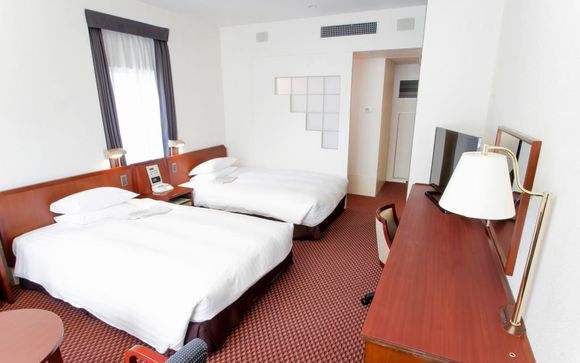
Hiroshima: Daiwa Roynet Hiroshima 3* or Sunroute Hiroshima 3* or similar
Kyoto: Ibis Styles Station 3* or Hearton Hotel Kyoto 3* or similar
Takayama: Hida Takayama Futari Shizuka 4* or Takayama Ouan 4* or similar
Tokyo: Agora Palace Asakusa 3* or Hotel The Knot Tokyo Shinjuku 3* or similar
4* Category Hotels
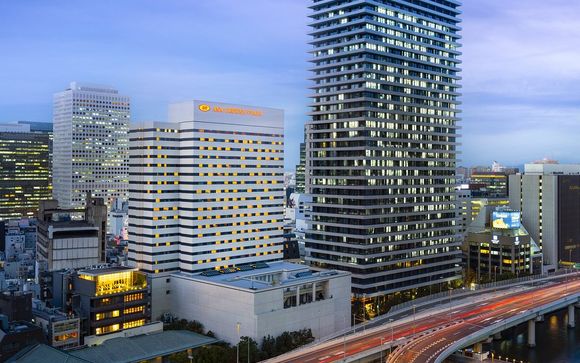
Hiroshima: Ana Crowne Plaza Hiroshima 4* or Oriental Hotel Hiroshima 4* or similar
Kyoto: Kyoto Tokyu 4* or Almont Hotel Kyoto 4* or similar
Takayama: Hida Takayama Futari Shizuka 4* or Takayama Ouan 4* or similar
Tokyo: Shinjuku Granbell 4* or Hotel East21 Tokyo 4* or similar

2 Adults
Please note: the bed for the 3rd guest sharing is likely to be a sofa bed or camp style bed. If any of these hotels are not available, hotels of a similar standard will be found.
Your Included Options —
Our members have the following options included in their stay.
Pocket WiFi for the duration of your stay

Your Optional Excursions —
Our members can choose to add the following excursions at the next stage of the booking process for an additional fee.
Tokyo Morning Tour
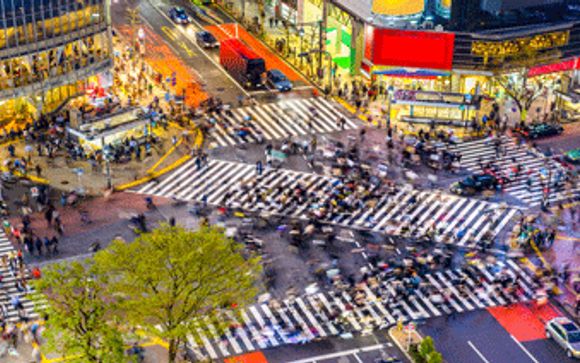
Tokyo - Tokyo Full Day Tour with Tea Ceremony (full day – in English)
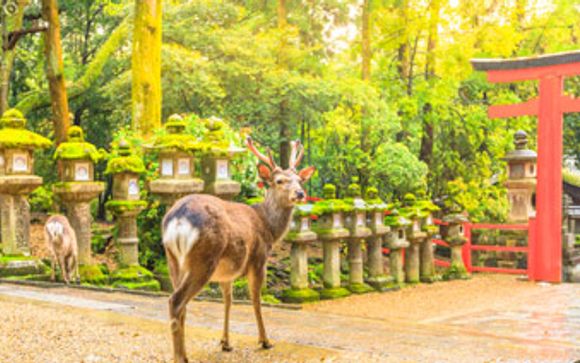
Kyoto - Visit of Kyoto and Nara
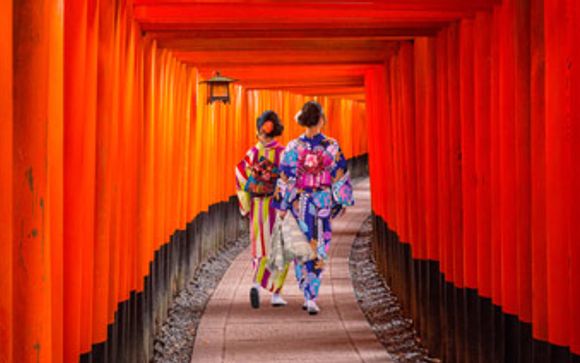
Kyoto - Visit the Fushimi Inari Shrine and Sake Tasting (in English - minimum 2 people)
Kyoto - Japanese Night (minimum 2 people)
Osaka - Full Day Tour (in English - minimum 2 people)
Osaka - Visit to Mt. Koya (minimum 2 people)
Your Journey in Japan —
Flights: You may choose from Economy, Premium or Business class flights on sectors that they operate, at the next stage of the booking process.
The flights included are with either a scheduled or no-frills airline and are subject to live availability and prices can change. You can choose your preferred departure times during the booking process. Please select your flight options carefully as departure and arrival airports may differ.
Transfers: Airport transfers upon arrival are not included. Upon arrival, you may activate your Japan Rail Pass. Upon your departure, you have a shuttle Limousine Airport Bus Transfer from Tokyo to Narita Airport.
JapanRail Pass: A 7 day Japan Rail Pass for train and shinkansen trips is included in this offer. We recommend you to activate your Japan Rail Pass on Day 1 for your journey from Osaka Airport to Osaka Centre.
Upon your arrival to Japan at Kansai Airport, please go to the Ticket Office (Hours: 5:30 - 23:00). After showing your passport to identify yourself, you’ll be able to move freely and comfortably through the country.
The following transportation is covered by the JR Pass:
- All lines of Japan Railways Group (JR)
- Shinkansen speedtrain Hikari / Kodama / Sakura (except Nozomi and Mizuho)
- Express trains
- Narita Express (Narita Airport Tokyo)
- JR buses
- Haruka (Osaka Airport Kansai - Shin)
- Ferry (Myajima - Miyajimaguchi)
- Circular train lines inside Tokyo city
- Yamanote Line (Tokyo) and Osaka (Kanjosen).
The Japan Rail Pass does not cover:
- Subway and buses in Tokyo and Kyoto (you can pay by prepaid transportation card)
- Private lines (that are not JR)
- Nozomi and Mizuho Shinkansen
