New
Exclusive

Our offers

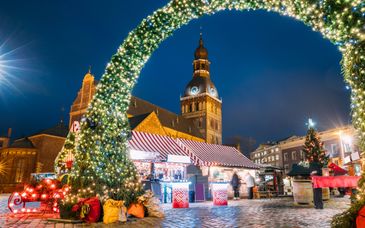
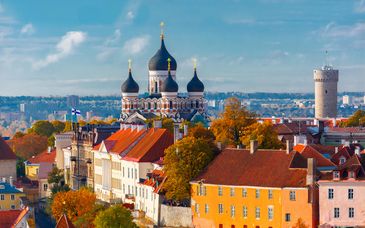
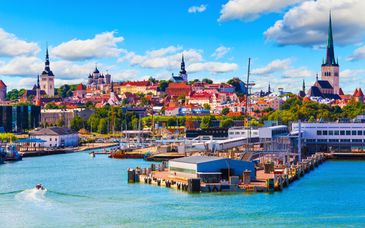
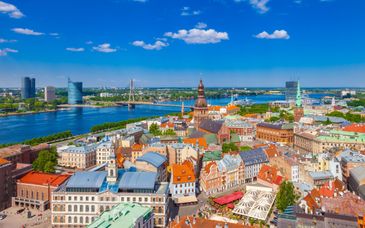
Table of contents
Vilnius emerges as one of Europe’s most rewarding city break destinations, blending centuries of history with youthful creative energy that captivates discerning travellers. From cobbled lanes threading through its UNESCO-listed Old Town to the quirky artist republic of Užupis, Lithuania’s capital delivers authentic experiences, outstanding cuisine and remarkable value. Whether you’re planning a romantic weekend or a leisurely four-day exploration, this compact Baltic gem promises discovery at every turn, with baroque spires piercing skylines above hidden courtyards where contemporary life pulses through medieval architecture, creating an atmosphere both intimate and invigorating for the curious explorer.

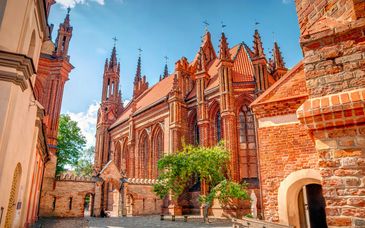
Experience the finest of the Baltic capitals with this comprehensive multi-day tour combining Vilnius, Riga and Tallinn. Enjoy six or nine nights in carefully selected four-star hotels, guided city visits that bring each capital’s history to life, and comfortable LuxExpress bus transfers between destinations. The itinerary includes optional private city tours, allowing you to tailor your experience. Perfect for first-time visitors wanting a hassle-free introduction to the region’s highlights, this tour balances structured sightseeing with free time to explore independently.
What we appreciate: The seamless combination of three fascinating capitals in one journey, with all logistics handled and expert local guides revealing hidden stories behind the landmarks.

Discover the magic of the Baltic capitals draped in winter charm with this specially curated six-night seasonal tour. Explore Vilnius, Riga and Tallinn when Christmas markets fill the squares, medieval architecture is dusted with snow, and welcoming cafés beckon. The package includes guided walking tours led by knowledgeable locals, comfortable selected hotels, and all essential transfers. Practical notes and included services are clearly listed, making planning effortless. Ideal for travellers seeking the enchantment of a Baltic winter without the complexity of independent arrangements.
What we appreciate: The festive atmosphere of winter markets and illuminated Old Towns, combined with expert guidance ensuring you experience the season’s highlights without the cold dampening your enjoyment.

For independent travellers who prefer flexibility, this self-guided option offers the perfect balance of structure and freedom. Spend six or nine nights exploring Vilnius, Riga and Tallinn at your own pace, with private transfers between cities and suggested visits to help you make the most of each destination. Choose from a selection of quality hotels and optional excursions, tailoring the experience to your interests. All logistics are arranged, leaving you free to discover hidden cafés, linger in museums, or wander the atmospheric streets as the mood takes you.
What we appreciate: The independence to explore on your terms whilst benefiting from pre-arranged transfers and accommodation, plus the flexibility to add excursions such as Trakai Castle as you wish.
Vilnius Old Town earned its UNESCO World Heritage status in 1994 thanks to its exceptional ensemble of Gothic, Renaissance, Baroque and Classical architecture spanning five centuries. Covering nearly 360 hectares, it ranks among Europe’s largest surviving medieval quarters, with over 1,500 buildings showcasing diverse architectural styles. The skyline bristles with church spires—Vilnius boasts more than 40 churches within the Old Town alone—each telling stories of the city’s complex religious and cultural history. Narrow cobbled lanes open onto hidden courtyards, whilst grand squares like Cathedral Square anchor the district. Unlike many European historic centres that feel museum-like, Vilnius Old Town pulses with contemporary life: locals shop at traditional markets, students fill bohemian cafés, and galleries occupy centuries-old cellars. The district’s authenticity stems from its organic development and the fact it remains a living neighbourhood rather than a preserved tourist attraction. Walking these streets, you’ll encounter layers of history—from the Gates of Dawn pilgrimage site to Soviet-era remnants—all woven into daily Lithuanian life.
One of Vilnius’s greatest assets for city breakers is its wonderfully compact and pedestrian-friendly layout. The entire Old Town measures roughly 1.5 kilometres across, meaning you can walk from one end to the other in under 30 minutes, though you’ll want far longer to explore properly. Major landmarks cluster within easy walking distance: Cathedral Square, Gediminas Tower, the Gates of Dawn and Užupis all lie within a comfortable stroll of each other. The city’s relatively flat terrain makes walking effortless, and well-maintained pavements ensure accessibility. Beyond the Old Town, neighbourhoods like the bohemian Užupis district and the leafy Bernardine Gardens are just minutes away on foot. This walkability means you’ll spend time discovering rather than commuting, stumbling upon delightful surprises—a hidden courtyard café, striking street art, a tiny artisan shop—that you’d miss from a bus or taxi. The compact scale makes Vilnius ideal for short breaks; even a weekend allows you to cover the highlights without feeling rushed.
Vilnius rewards visitors year-round, each season painting the city in different moods. Late spring (May–June) brings long daylight hours, blooming parks, and outdoor café culture in full swing, with temperatures hovering around 15–20°C—ideal for walking tours and al fresco dining. Summer (July–August) sees the warmest weather (20–25°C) and numerous festivals, though it’s also peak tourist season. Autumn (September–October) offers perhaps the most magical atmosphere: golden leaves carpet the parks, crowds thin, and the light takes on a honeyed quality perfect for photography, whilst temperatures remain comfortable for exploration. Winter transforms Vilnius into a fairy-tale scene, especially in December when Christmas markets fill Cathedral Square and the Old Town sparkles with lights; temperatures drop well below freezing, but the festive atmosphere and lack of crowds appeal to many travellers. For the best balance of weather, atmosphere and value, consider visiting in May, September or early December, when Vilnius reveals its character without summer crowds or deep winter chill.
A weekend in Vilnius delivers a satisfying taste of the city’s highlights. Start Saturday morning at Cathedral Square, the city’s ceremonial heart, before climbing Gediminas Tower for panoramic views across the terracotta rooftops. Descend and wander through the Old Town’s winding lanes, pausing at St Anne’s Church (a Gothic masterpiece) and the atmospheric courtyards of Vilnius University, one of Eastern Europe’s oldest academic institutions. Lunch on traditional Lithuanian fare—perhaps cepelinai or cold beetroot soup—at a local restaurant. In the afternoon, explore the bohemian Užupis district, crossing the bridge into this self-declared artists’ republic to admire street art and quirky galleries. In the evening, dine in the Old Town and perhaps catch a performance at the National Opera. On Sunday morning, visit the Gates of Dawn, an important pilgrimage site housing a revered icon, then stroll through the Bernardine Gardens. Dedicate your afternoon to museums or wander, discovering hidden cafés and artisan shops. This route covers essential sights whilst leaving room for spontaneous discoveries.
Three days allows for more relaxed exploration plus a memorable excursion beyond the city. Follow the weekend itinerary for your first day, covering Cathedral Square, Gediminas Tower and an initial Old Town wander. On day two, dedicate your morning to museums: the MO Museum showcases contemporary Lithuanian art in a striking modern building, whilst the Museum of Occupations and Freedom Fights (housed in the former KGB headquarters) offers sobering insight into Soviet-era repression. In the afternoon, explore Užupis thoroughly—visit galleries, read the tongue-in-cheek constitution displayed in multiple languages, and linger in bohemian cafés where artists and writers gather. In the evening, seek out a traditional Lithuanian restaurant to try local specialities. On day three, take a half-day trip to Trakai Castle, just 28 kilometres west of Vilnius. This fairy-tale fortress sits on an island in Lake Galv?, its red-brick towers reflected in the water—one of Lithuania’s most photographed sights. Explore the castle museum, then sample kibinai (traditional Karaim pastries) in Trakai town before returning to Vilnius.
Four days permits a leisurely exploration, allowing you to experience Vilnius like a temporary resident rather than a rushed tourist. Follow the three-day itinerary for your foundation, then use the extra time to delve deeper into neighbourhoods and daily life. Dedicate a morning to Hal?s Market, the city’s main food market where locals shop for produce, smoked fish, cheeses and baked goods—it’s a feast for the senses and perfect for assembling a picnic. Explore residential districts beyond the Old Town, perhaps the leafy embassy quarter or the revitalised Naujamiestis area with its Art Nouveau buildings and independent boutiques. Visit smaller museums you’d otherwise skip: the Amber Museum-Gallery, the quirky Museum of Illusions, or the Vilna Gaon Jewish State Museum, documenting the city’s once-thriving Jewish community. Consider a longer day trip: the Hill of Crosses near Šiauliai offers a powerful pilgrimage site where thousands of crosses create an unforgettable landscape, or explore Aukštaitija National Park for lakes and forests. This relaxed pace lets you appreciate Vilnius’s rhythms, discover off-the-beaten-path corners, and return home feeling you’ve truly connected with the city.
Cathedral Square (Katedros aikšt?) forms Vilnius’s ceremonial heart, dominated by the neoclassical Cathedral Basilica with its gleaming white columns and detached bell tower. The square hosts major events and celebrations, and locals believe standing on the “stebuklas” (miracle) tile and spinning three times brings wishes true. Adjacent, Gediminas Tower crowns Castle Hill, the sole surviving fragment of the Upper Castle; climb the funicular or tackle the steps for sweeping 360-degree views across the Old Town’s spires and the modern city beyond. The tower houses a small museum on Lithuanian history and offers the city’s best photo opportunities. At the Old Town’s southern edge, the Gates of Dawn (Aušros Vartai) stands as the only remaining gate from the original city walls, famous for the chapel above housing a revered icon of the Virgin Mary. Pilgrims from across Europe visit this sacred site, and even non-religious visitors find the atmosphere moving. These three landmarks anchor any Vilnius visit, each representing different facets of the city’s identity.
Beyond the headline attractions, Vilnius’s true character emerges in its quirky neighbourhoods and creative spaces. Užupis, the self-declared artists’ republic, occupies a formerly neglected district across the Vilnia River that has transformed into Vilnius’s bohemian heart. Its tongue-in-cheek constitution (proclaiming rights like “Everyone has the right to be happy” and “A cat has the right to be a cat”) is displayed in dozens of languages on a wall near the bridge. Galleries, studios and eccentric cafés fill the streets, and the district celebrates its independence each April Fools’ Day. The Bernardine Gardens, nestled between the Old Town and the river, offer a green sanctuary with winding paths, sculptures and the picturesque Bernardine Church as a backdrop—perfect for a peaceful interlude. Vilnius has embraced street art enthusiastically; entire buildings serve as canvases for striking murals, particularly in the Naujamiestis district. Seek out works by local and international artists commenting on history, identity and contemporary life. The city’s café culture deserves exploration too: from minimalist Scandinavian-style coffee bars to cosy Soviet-era-themed spots, each café has a distinct character.
Vilnius’s central location makes it an excellent base for rewarding day trips into Lithuania’s countryside and neighbouring regions. Trakai Castle, just 28 kilometres west, tops every visitor’s list: this 14th-century island fortress, beautifully restored, sits in the middle of Lake Galv?, surrounded by forested shores. The castle museum explores medieval Lithuanian history, and the town itself is home to the Karaim community, whose traditional kibinai pastries you must try. The journey takes 30 minutes by car or bus, making it an easy half-day excursion. For something more unusual, the Hill of Crosses near Šiauliai (about 215 kilometres north) presents an extraordinary sight: a pilgrimage site where over 100,000 crosses of all sizes have been placed over decades, creating a powerful landscape of faith and Lithuanian resistance. It requires a full day (2.5 hours each way) but leaves a profound impression. Some travellers use Vilnius as a starting point for multi-day Baltic tours, visiting Riga (Latvia) and Tallinn (Estonia); comfortable LuxExpress buses connect the capitals in 4–5 hours.
Reaching Vilnius from the UK is straightforward, with direct flights from London, Edinburgh and other major cities operated by carriers including Ryanair, Wizz Air and national airlines. Flight time averages 2.5–3 hours, and advance booking often yields fares under £50 return, making Vilnius one of Europe’s most accessible and affordable city break destinations. Vilnius Airport sits just six kilometres south of the city centre; trains run every hour to the railway station (seven minutes, around €1), or taxis cost approximately €10–15 for the 15-minute journey. Within Vilnius, walking covers most needs—the compact Old Town and nearby attractions are easily explored on foot. For longer distances, the city operates an efficient public transport network of buses and trolleybuses; single tickets cost around €1 when purchased from kiosks. Taxis and ride-sharing apps like Bolt offer affordable alternatives for late evenings or when you’re tired. If you’re planning a Baltic capitals tour, LuxExpress operates comfortable, modern buses connecting Vilnius, Riga and Tallinn with Wi-Fi, power outlets and refreshments on board; the Vilnius–Riga journey takes about four hours.
Vilnius ranks among Europe’s most budget-friendly capitals, offering exceptional value without compromising quality. Accommodation ranges from hostels (€15–25 per bed) to mid-range hotels (€50–80 for a double room) and luxury properties (€100–150+). Dining costs less than in Western Europe: a hearty meal at a traditional restaurant runs €10–15 per person, whilst upscale dining rarely exceeds €30–40. Street food and café lunches cost €5–8. Coffee averages €2–3, local beer €3–4 in pubs. Museum entry fees are modest, typically €4–8, with many offering free admission one day per month. Public transport is remarkably cheap at around €1 per journey. A realistic daily budget might be: €60–80 for budget travellers (hostel, street food, free attractions), €100–150 for mid-range comfort (decent hotel, restaurant meals, paid attractions), or €200+ for luxury experiences. To save money, visit during shoulder seasons (May, September) when accommodation rates drop but weather remains pleasant. Book flights well in advance for the best fares. Eat your main meal at lunch when many restaurants offer set menus at reduced prices. Shop at markets like Hal?s for picnic supplies rather than eating every meal out.
Lithuanian cuisine, hearty and rooted in local ingredients, deserves exploration during your Vilnius city break. Cepelinai, the national dish, are large potato dumplings shaped like zeppelins, stuffed with minced meat or curd cheese, and served with sour cream and bacon bits—filling, flavourful and quintessentially Lithuanian. Cold beetroot soup (šaltibarš?iai), bright pink and refreshing, appears on summer menus, made with beetroot, kefir, cucumber and dill, often served with hot potatoes. Kugelis, a potato pudding baked with eggs, bacon and onions, offers another traditional comfort food. For lighter fare, try skilandis (smoked sausage) or various smoked fish from Lithuania’s lakes. Desserts include šakotis, a spectacular tree cake baked on a rotating spit, creating dozens of crispy branches—it’s served at celebrations and available in cafés. Tinginys (“lazy cake”) combines biscuits, cocoa and condensed milk for a no-bake treat. Wash everything down with Lithuanian beer (Švyturys and Utenos are popular brands) or try midus, traditional honey mead. For authentic experiences, visit Lokys (in a 15th-century cellar, known for game dishes), Ertlio Namas (upscale traditional cuisine) or Berneli? Užeiga (rustic atmosphere, generous portions). Don’t leave without trying at least cepelinai and šaltibarš?iai.

Vilnius stands as a city break destination that rewards the discerning traveller with authenticity, beauty and value in equal measure. From the baroque splendour of its UNESCO Old Town to the creative energy of Užupis, from the medieval majesty of Trakai Castle to the vibrant flavours of Lithuanian cuisine, this Baltic capital delivers memorable experiences without the crowds or costs of more famous European destinations. Whether you choose a whirlwind weekend or a leisurely four-day exploration, Vilnius promises discovery, delight and a genuine connection with a city confidently embracing its past whilst creating a dynamic future.
Absolutely. Vilnius combines rich history, stunning architecture, vibrant culture, and excellent value in a compact, walkable package. The UNESCO Old Town rivals any European capital for beauty, whilst the bohemian Uzupis district and thriving café scene add contemporary energy. Unlike over-touristed destinations, Vilnius retains authenticity—you'll experience genuine Lithuanian life alongside historical sights. The city's manageable size means even a weekend delivers a satisfying experience, whilst longer stays reveal hidden depths. Excellent flight connections from the UK, affordable prices, and friendly locals make Vilnius ideal for both first-time visitors to Eastern Europe and seasoned travellers seeking somewhere fresh.
Vilnius ranks among Europe's most affordable capitals, offering remarkable value across accommodation, dining, and attractions. Prices typically run 40–60% lower than Western European cities like London, Paris, or Amsterdam. A comfortable mid-range hotel costs €60–80 per night, a substantial restaurant meal €10–15, and museum entry €5–8. Even luxury experiences—upscale dining, spa treatments, boutique hotels—cost less than equivalent offerings elsewhere. Budget travellers can manage on €60–80 daily, whilst €150 per day allows considerable comfort. The excellent value means your money stretches further, letting you upgrade accommodation, dine well, or extend your stay without budget anxiety.
Both Baltic capitals merit visits, each with distinct character. Vilnius feels more intimate and bohemian, with its winding medieval lanes, artistic Uzupis quarter, and baroque architecture creating a romantic, quirky atmosphere. It's more 'authentic,' with fewer tourists and stronger local character. Riga, Latvia's capital, is larger and more cosmopolitan, boasting spectacular Art Nouveau architecture, livelier nightlife, and more developed tourist infrastructure. Riga's Old Town is more compact and 'picture-perfect,' whilst Vilnius's sprawls more organically. For a first Baltic visit, Vilnius offers better value and a more distinctive experience; Riga suits those wanting more urban energy and architectural grandeur. Ideally, visit both—they're just four hours apart by bus.
A weekend (two days/two nights) suffices to cover Vilnius's main highlights—Cathedral Square, Gediminas Tower, Old Town wandering, Uzupis, and the Gates of Dawn—at a brisk but satisfying pace. Three days allows more relaxed exploration plus a day trip to Trakai Castle and time for museums or leisurely café sessions. Four days lets you truly settle in, explore residential neighbourhoods, visit markets, and perhaps take a longer excursion or adopt a slower, more immersive rhythm. For a Baltic capitals tour combining Vilnius with Riga and Tallinn, plan six to nine days total. Most visitors find three days the sweet spot: enough time to see everything important without feeling rushed, yet not so long that you exhaust the city's offerings.
UK citizens need only a valid passport (no visa required) for stays up to 90 days, as Lithuania is an EU member (though post-Brexit, ensure your passport has at least six months' validity). Lithuania uses the euro, making budgeting straightforward. The official language is Lithuanian, but English is widely spoken in hotels, restaurants, and tourist areas. The climate is continental—warm summers, cold winters—so pack accordingly. Vilnius is very safe, with low crime rates, though standard precautions apply. Tipping isn't obligatory but rounding up or leaving 5–10% for good service is appreciated. Tap water is safe to drink. The time zone is EET (GMT+2, GMT+3 in summer), two hours ahead of the UK. Most shops close Sundays, and restaurants may have limited hours.