New
Exclusive

Table of contents
Few Mediterranean destinations compress such grandeur into so small a footprint. The Bay of Kotor curves between limestone mountains, its mirror-still waters reflecting Baroque palaces and pine-clad slopes. At the bay's innermost reach stands Kotor Old Town, a maze of medieval alleys enclosed by towering city walls that climb the mountainside to San Giovanni Fortress. Venetian lions, Romanesque portals and café-filled piazzas reveal centuries of maritime prosperity, while the surrounding villages of Perast, Muo and Perca offer quieter waterfront charm. For travellers seeking a short break that combines cultural depth with scenic beauty, Kotor delivers an intensity of experience rare among European city breaks. The compact layout means you can climb a fortress at sunrise, explore UNESCO-listed churches by mid-morning, sail to island sanctuaries after lunch and dine beside the water at sunset—all within a single day. Register with the platform to discover exceptional stays and exclusive offers in top-tier hotels around the bay, ensuring a seamless and memorable escape to one of the Adriatic's most photogenic corners.

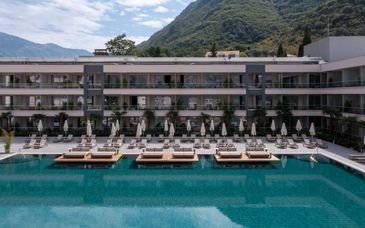
Set on a private beachfront between Kotor and Tivat, the Hyatt Regency Kotor Bay Resort offers modern luxury framed by mountain and sea panoramas. Spacious rooms feature floor-to-ceiling windows overlooking the bay, while the infinity pool appears to merge with the Adriatic horizon. A full-service spa, three restaurants serving Mediterranean and international cuisine, and direct beach access make this resort ideal for travellers seeking relaxation between cultural excursions. Families appreciate the kids' club and shallow swimming areas, while couples enjoy the sunset terrace and candlelit waterfront dining. The resort's concierge arranges boat trips, fortress-climb transfers and day excursions to Perast or Budva, ensuring effortless exploration of the bay's highlights during your city break.
What we love: The infinity pool's seamless bay views and the resort's proximity to Kotor Old Town.

Lazure Hotel & Marina occupies a historic waterfront palazzo in the Bay of Kotor, blending heritage architecture with contemporary comfort. Guests enjoy premium services including a rooftop pool, spa treatments and gourmet dining overlooking the marina. Each room combines original stone details with modern amenities, and many feature private balconies facing the water. The hotel's central location allows easy access to Kotor Old Town by water taxi or a scenic coastal walk, while the marina setting offers a quieter alternative to staying inside the medieval walls. Half-board and all-inclusive packages simplify planning, and the concierge organises gulet cruises, kayaking excursions and transfers to Lov?en National Park for sunset viewpoints.
What we love: The rooftop pool's panoramic bay vistas and the seamless blend of historic charm with modern luxury.

Kotor Vista provides two-bedroom apartments with shared pool and direct views over the bay, offering families and groups a practical, cost-effective base for a city break. Each apartment features a kitchenette, washing machine and furnished balcony, giving the flexibility to self-cater or dine out in nearby Kotor Old Town, reachable in ten minutes by car or water taxi. The shared pool and landscaped gardens create a relaxing environment after a day exploring churches, climbing city walls or sailing to Our Lady of the Rocks. Parking is included, making Kotor Vista an excellent choice for those hiring a car to visit Budva, Herceg Novi or Lov?en. The apartments suit longer stays, allowing families to spread out and maintain routines while enjoying the freedom to explore at their own pace.
What we love: The two-bedroom layout and direct bay views, perfect for families seeking space and flexibility.

Kotor combines the cultural richness of a UNESCO-listed medieval town with the natural drama of a fjord-like bay, all in a compact area that rewards short stays. Unlike sprawling capitals, Kotor Old Town can be explored on foot in hours, yet offers enough depth—churches, museums, fortress climbs, boat trips—to fill several days without repetition. Direct flights from the UK to Tivat Airport (fifteen kilometres away) and Dubrovnik Airport (ninety minutes by transfer) make access straightforward, while the destination's affordability compared to Western European city breaks appeals to travellers seeking premium experiences at moderate cost. The bay's micro-climate ensures mild winters and warm, dry summers, extending the viable season from April through October. Kotor suits diverse traveller profiles: couples find romance in waterfront dining and sunset fortress views, families appreciate safe streets and easy excursions, and active visitors relish hiking, kayaking and gulet cruises. The blend of history, scenery and accessibility explains why Kotor has become one of the Adriatic's rising city-break stars.
The Bay of Kotor earns frequent comparison to Norwegian fjords, though tectonic subsidence rather than glaciation carved its dramatic contours. Steep limestone peaks plunge into sheltered waters that twist through four interconnected gulfs, creating a landscape of rare visual intensity. At the bay's heart, Kotor Old Town preserves a millennium of maritime heritage within intact Venetian walls. UNESCO recognition in 1979 acknowledged both the town's architectural ensemble—Romanesque churches, Gothic palaces, Baroque piazzas—and the surrounding cultural landscape of coastal villages, island sanctuaries and mountain fortifications. St Tryphon's Cathedral, the Maritime Museum and a labyrinth of cobbled alleys reveal layers of Illyrian, Roman, Byzantine and Venetian influence. The bay's mirror-calm waters reflect stone houses and pine forests, while the city walls climb nearly a thousand vertical metres to San Giovanni Fortress, offering panoramas that stretch from Perast to the open Adriatic. This fusion of natural grandeur and historical depth distinguishes Kotor from typical Mediterranean city breaks, where culture and landscape often exist in parallel rather than synthesis.
May, June, September and October represent the optimal window for a Kotor city break, balancing warm weather, manageable crowds and competitive pricing. Daytime temperatures range between twenty-two and twenty-eight degrees, ideal for fortress climbs and boat trips without the oppressive heat of high summer. July and August bring peak season: temperatures exceed thirty degrees, cruise ships dock daily (flooding the Old Town between ten and four), and hotel rates rise accordingly. Yet these months offer the longest daylight, vibrant evening atmosphere and guaranteed sunshine for beach days in Budva or swimming stops on gulet cruises. April and late October provide budget-conscious alternatives, though cooler temperatures (fifteen to twenty degrees) and occasional rain require flexible itineraries; some boat operators and seasonal restaurants close outside the main season. November through March sees the bay at its quietest: hotel rates drop, locals reclaim the streets, but many attractions reduce hours and boat trips cease. For photography enthusiasts, shoulder-season light—softer and more dramatic than summer's glare—enhances the bay's already photogenic qualities. Cruise-ship schedules (published online) help day-trippers time Old Town visits for early mornings or late afternoons when tour groups have departed.
Kotor's compact scale and diverse offering suit multiple traveller types. Couples discover romance in lamplit alleyways, candlelit waterfront dinners and sunset views from the fortress ramparts; boutique hotels inside the Old Town or waterfront resorts like the Hyatt Regency provide intimate settings for anniversaries or honeymoons. Families appreciate the destination's safety, walkability and variety: children enjoy boat trips to island churches, swimming in hotel pools and exploring castle walls, while parents value short transfer times, family-friendly resorts with kids' clubs, and the option to rent apartments with kitchenettes for flexible meal routines. Active travellers find ample challenge: the 1,350-step fortress climb tests endurance, kayaking and stand-up paddleboarding circuits explore hidden coves, cycling routes wind through coastal villages, and day hikes in Lov?en National Park offer alpine scenery and panoramic viewpoints. Solo travellers benefit from Kotor's safety, English-speaking locals and the ease of joining group boat tours or gulet cruises to meet fellow visitors. Even less-mobile guests enjoy the flat, pedestrianised Old Town (though the fortress climb is not accessible), waterfront promenades and boat trips that require minimal exertion. This versatility explains Kotor's broad appeal across age groups, interests and fitness levels.

Kotor's proximity to key attractions—everything within thirty minutes by car or boat—makes it ideal for short breaks. The following itineraries provide ready-to-use templates, balancing culture, activity and relaxation. Adapt timings to your pace: slow walkers may prefer three days over two, while energetic travellers can compress four days' highlights into three. All itineraries assume arrival at Tivat Airport or Dubrovnik Airport with onward transfer, and departure from the same. Book accommodation inside or near Kotor Old Town to minimise transport and maximise sightseeing time.
Day one: arrive mid-morning, check into your hotel (consider the Hyatt Regency or a central Old Town property), then spend two hours exploring Kotor Old Town—St Tryphon's Cathedral, the Maritime Museum, Trg od Oružja square and narrow alleyways lined with boutiques and cafés. Lunch at a waterfront konoba (traditional tavern), then tackle the city-wall climb to San Giovanni Fortress in late afternoon when temperatures cool; allow ninety minutes ascent, forty-five minutes descent, and carry water. Evening: shower, rest, then dine in the Old Town. Day two: early breakfast, then join a two-hour boat trip to Our Lady of the Rocks and Perast (depart 9am from the Old Town quay; cost around twelve euros). Explore the island church, stroll Perast's Baroque waterfront, return by noon. Final lunch with bay views, last-minute souvenir shopping, depart late afternoon. This itinerary is intense but covers Kotor's essentials; best suited to energetic couples or solo travellers comfortable with a brisk pace.
Day one: arrive, settle into your resort (Lazure Hotel & Marina or Kotor Vista), then enjoy a gentle afternoon exploring Kotor Old Town—churches, squares, cafés—without rushing. Evening waterfront stroll and dinner. Day two: morning boat trip to Our Lady of the Rocks and Perast; lunch in Perast at a bay-view restaurant; return mid-afternoon and relax by the hotel pool or beach. Day three: hire a car or join a half-day tour to Lov?en National Park (forty-five minutes' drive). Visit the Njegoš Mausoleum atop Mount Lov?en (1,650 metres), enjoy panoramic views over the bay and Montenegro's interior, then descend in time for sunset. Return to Kotor for a farewell dinner. This pace allows time to savour each experience, take photographs and enjoy hotel amenities. Ideal for families, older travellers or anyone preferring a less frantic rhythm. Staying in a waterfront resort enhances relaxation, combining culture with downtime.
Days one to three: follow the three-day itinerary above. Day four, option A: day trip to Budva (thirty minutes by car or bus)—explore Budva Old Town, relax on Mogren Beach, walk to the Sveti Stefan viewpoint, return evening. Option B: join a full-day gulet cruise around the bay, visiting hidden coves, the Blue Cave and coastal villages; swimming, lunch on board, leisurely pace. For travellers wanting a multi-day sailing experience, the 7-night Gulet Cruise Kotor offers half-board accommodation in traditional wooden cabins and a comprehensive itinerary along Montenegro's coast. Four days allow deeper exploration without rush, suit travellers combining culture with beach time, and provide flexibility to rest, explore or add spontaneous excursions. Families and couples seeking both activity and relaxation will find this duration ideal.
Kotor and the surrounding bay concentrate a remarkable density of attractions within a small area. The following sections detail the must-see sights and activities, from medieval churches to mountain hikes, ensuring you make the most of your city break.
St Tryphon's Cathedral dominates the Old Town skyline with twin Romanesque bell towers; the interior's gilded altar and treasury of relics justify the small entry fee (three euros). The Maritime Museum, housed in a Baroque palace near the Sea Gate, chronicles Kotor's naval history through ship models, maps and captains' portraits. Trg od Oružja, the main square, buzzes with café terraces beneath the Clock Tower; nearby, St Luke's Church and St Nicholas' Church offer quieter, free-entry glimpses of Orthodox and Catholic heritage. Wander the maze of narrow alleys—Gurdi?a, Pima, Mlijecna—to discover hidden courtyards, artisan workshops and the famous cats of Kotor (the town supports a large feline population, celebrated in a dedicated museum). Allocate two to three hours for a thorough exploration; early morning or late afternoon provides the best light and fewer cruise-ship crowds. Staying inside the Old Town (boutique hotels) or nearby (Hyatt Regency, Lazure) maximises time and eliminates transport needs.
The climb to San Giovanni Fortress remains Kotor's signature experience. Starting from the Old Town's northwest corner, 1,350 stone steps zigzag up the mountainside, gaining 280 vertical metres over 1.4 kilometres. The ascent takes sixty to ninety minutes (depending on fitness and photo stops), the descent forty-five minutes. Entry costs eight euros (pay at the gate; bring cash). Difficulty: moderate to strenuous—steps are steep, uneven and exposed, with minimal shade. Best time: sunrise (gates open 6am in summer) for cooler temperatures and golden light, or late afternoon for sunset views. Avoid midday heat in July and August. What to bring: one litre of water per person, sun hat, sunscreen, sturdy walking shoes (not flip-flops), camera. Halfway up, the Church of Our Lady of Remedy provides a rest stop and photo opportunity. At the top, panoramic views sweep across Kotor Old Town, the bay's four gulfs and distant mountain ranges—worth every step. Safety: take your time, use handrails, watch for loose stones, and turn back if weather deteriorates. Post-climb, the spa at the Hyatt Regency offers massage and hydrotherapy to soothe tired legs.
Half-day boat trips (two to three hours) typically follow the route Kotor–Our Lady of the Rocks–Perast–Kotor. Water taxis and group tours depart from the Old Town quay; cost ten to fifteen euros per person. The island church of Our Lady of the Rocks, built on an artificial reef, houses Baroque frescoes and votive silver; Perast's waterfront palaces and twin-towered churches offer postcard views. Full-day trips (six to eight hours; thirty to fifty euros) add stops at the Blue Cave (natural sea grotto with luminous water), Mamula Island (Austro-Hungarian fortress) and Herceg Novi, with swimming breaks and lunch included. Multi-day gulet cruises provide a different experience: traditional wooden sailing boats, half-board accommodation in compact cabins, leisurely itineraries around Montenegro's coast (Kotor, Budva, Bar, Ulcinj). The 7-night Gulet Cruise Kotor exemplifies this format—curated, all-inclusive, ideal for couples and small groups seeking relaxation, scenic beauty and coastal exploration. Gulet cruises combine a Kotor city break with extended sailing, appealing to travellers who want both urban culture and open-water adventure.

Accommodation choice shapes your Kotor city-break experience as much as itinerary. The following sections compare locations and property types, helping you match your stay to your travel style, budget and priorities.
Staying inside Kotor Old Town immerses you in medieval atmosphere: wake to church bells, breakfast on a café terrace, explore churches and museums within minutes of your door. Evening ambience—lamplit squares, live music, waterfront dining—adds magic. Drawbacks: noise from bars and cruise crowds (especially July–August), limited parking (most hotels offer drop-off only), and some historic buildings lack lifts or pools. Muo and Perca, suburban neighbourhoods just outside Kotor, offer modern hotels with pools, parking and quieter surroundings; a ten-minute walk or short drive reaches the Old Town. Perast, ten kilometres north, provides romantic waterfront village charm, boutique hotels and direct bay views, but fewer dining options and reliance on a car or taxi for Kotor visits. Properties like the Hyatt Regency and Lazure Hotel & Marina combine waterfront or near-Old-Town locations with resort amenities, balancing atmosphere and convenience. Decide based on priorities: culture-focused walkers favour central; relaxation-seekers prefer resorts; romantics may choose Perast.
Two days covers the essentials—Old Town exploration, fortress climb and a short boat trip to Perast and Our Lady of the Rocks. Three days allows a relaxed pace, adding Lov?en National Park and downtime at your hotel pool or beach. Four days incorporates a Budva day trip or full-day gulet cruise. Most travellers find three days the sweet spot, balancing culture, activity and relaxation without feeling rushed. Kotor's compact size makes even a weekend break highly rewarding.
Kotor excels in history, culture and dramatic scenery—its UNESCO Old Town, fortress climb and fjord-like bay appeal to travellers seeking medieval charm and natural grandeur. Budva offers sandy beaches, vibrant nightlife and a livelier resort atmosphere, ideal for sun-seekers and younger crowds. For culture-focused city breaks, choose Kotor; for beach holidays, Budva. Many visitors combine both in a four-day itinerary, enjoying the best of Montenegro's coast.
Kotor and Perast rank as Montenegro's prettiest, each offering distinct beauty. Kotor captivates with its medieval Old Town, mountain-backed bay and imposing city walls. Perast charms with waterfront Baroque palaces, twin-towered churches and the island sanctuaries of Our Lady of the Rocks and St George. Budva Old Town and Herceg Novi also compete for the title. Beauty remains subjective, but the Bay of Kotor region concentrates Montenegro's most photogenic landscapes and architecture in a compact area.
Dubrovnik is larger, more famous (Game of Thrones filming location) and busier, with higher prices and summer crowds. Kotor offers a smaller, more intimate experience, fewer tourists, better value and equally stunning UNESCO-listed walls and Adriatic views. Both feature medieval architecture and coastal beauty. Recommend Kotor for a quieter, authentic city break and easier exploration; Dubrovnik for iconic sights and more extensive amenities. Many travellers visit both—Dubrovnik lies ninety minutes from Kotor—combining Croatian and Montenegrin highlights.
Montenegro is very safe for tourists, but exercise standard precautions. Pickpocketing is rare but possible in crowded Old Town areas and on cruise-ship days—keep valuables secure. Driving requires care: mountain roads are narrow and winding, local drivers can be assertive; consider hiring a local driver for excursions. Summer heat exceeds thirty degrees—carry water, wear sun protection and avoid midday fortress climbs. Montenegro uses the euro; cards are widely accepted, but carry cash for small vendors and boat-trip operators. Tipping ten per cent in restaurants is customary.