
New
Exclusive

Our offers
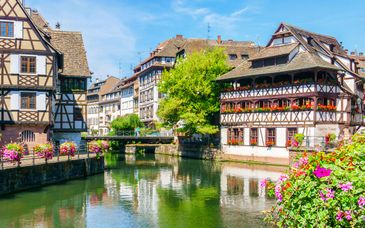
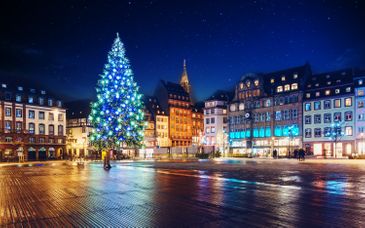
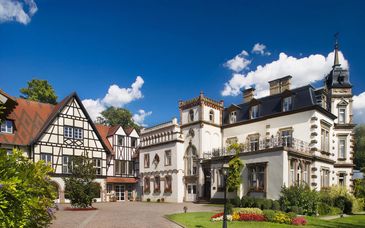
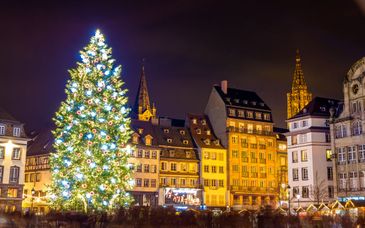
Table of contents
Discover Strasbourg, the enchanting Alsatian capital where Franco-German heritage meets UNESCO-listed architecture on the compact Grande Île. Wander through the fairy-tale canals of La Petite France, marvel at the soaring Gothic splendour of Strasbourg Cathedral, and savour the harmonious blend of French elegance with German gemütlichkeit. A weekend escape here promises world-class gastronomy, legendary Christmas markets, leisurely boat cruises on the River Ill, and excellent train connections from major European cities. Register now to unlock exceptional hotel stays and exclusive offers that transform a short break into an unforgettable Alsatian experience, where cobbled lanes and half-timbered houses await around every corner.

Nestled in the heart of Strasbourg's most iconic quarter, the Regent Petite France Hotel & Spa offers an unrivalled location overlooking the picturesque canals and half-timbered houses. This five-star haven combines historic charm with contemporary luxury, featuring elegantly appointed junior suites, a serene spa, and river views that capture the essence of Alsatian romance. Perfect for couples seeking a refined city-break base, the hotel places you steps from the cathedral and Grande Île's cobbled lanes.
What we love: The enchanting riverside setting in La Petite France, luxurious spa facilities, and spacious junior suites that blend period character with modern comfort.

Ideally positioned for exploring Strasbourg's historic treasures, the Best Western Hotel de France delivers comfort and convenience at excellent value. Within easy walking distance of La Petite France and the cathedral, this four-star property offers well-appointed rooms and a hearty bed-and-breakfast package that fuels your sightseeing days. Its central location makes it a smart choice for first-time visitors keen to tick off the city's signature sights on foot.
What we love: The prime location near major attractions, reliable four-star comfort, and flexible bed-and-breakfast offers that suit weekend explorers.

For a truly unique Strasbourg experience, the Boat-Hotel MS Carmen offers floating accommodation moored in the heart of the city. This distinctive four-star vessel combines nautical charm with hotel comfort, featuring cosy cabins, breakfast on deck, and immediate access to Strasbourg's Christmas markets and historic centre. It's an unforgettable way to wake up on the water whilst remaining steps from the cathedral and Petite France's winding streets.
What we love: The one-of-a-kind boat-hotel concept, central mooring close to all major sights, and the novelty of a floating base for your city break.

The Golden Tulip Strasbourg The Garden blends modern amenities with a peaceful garden setting, all within easy reach of the cathedral and Christmas market stalls. This four-star hotel features comfortable rooms, wellness facilities including a sauna and fitness area, and seasonal packages tailored to festive visitors. Its combination of tranquillity and proximity makes it ideal for travellers who want a restful retreat after days spent exploring Strasbourg's bustling streets and markets.
What we love: The serene garden atmosphere, wellness facilities for post-sightseeing relaxation, and convenient access to the cathedral and seasonal Christmas market.
The Alsatian capital captivates with its compact, walkable Grande Île, a UNESCO World Heritage site where centuries of history unfold within a few square kilometres. This unique Franco-German duality permeates every aspect of the city—bilingual street signs guide you through cobbled lanes, half-timbered Alsatian houses stand beside elegant French mansions, and the culinary scene marries choucroute with refined pâtisserie. The River Ill and its network of canals lace the old town, creating picturesque waterways spanned by ancient bridges and lined with willow trees. Gothic spires pierce the skyline alongside Art Nouveau façades and Renaissance gables, a testament to the city's layered past under alternating French and German rule. This cultural richness remains rare in Europe—visitors enjoy German beer culture in French brasseries, sample Riesling in timber-framed winstubs, and explore a cosmopolitan yet intimate atmosphere. The entire historic centre unfolds on foot within a weekend, making Strasbourg an ideal short-break destination where density of sights meets ease of navigation, perfect for first-timers and seasoned travellers alike.
Begin your exploration in La Petite France, the postcard-perfect quarter where half-timbered houses adorned with flower-draped balconies lean over narrow canals—an irresistible setting for photography and leisurely strolls through medieval lanes. Next, Strasbourg Cathedral commands attention with its single soaring spire, intricate façade sculptures depicting biblical scenes, and the famous astronomical clock inside; climb the 332 steps to the platform for panoramic views across the Vosges and Black Forest. Then Place Kléber, the city's grand central square, hosts year-round cafés beneath arcaded buildings and becomes home to the Christmas market's towering tree each December. Finally, venture to the European Quarter along the Rhine, where the sleek glass-and-steel European Parliament and Council of Europe buildings symbolise Strasbourg's role as a European capital—a striking contrast to the medieval core. These four anchor points form the backbone of any itinerary, easily linked by tram or on foot, each offering distinct architectural periods and cultural experiences within a remarkably compact area.
Plan your visit during spring (April to May) or early autumn (September to October) to enjoy mild, pleasant weather, fewer crowds, and the chance to linger on outdoor terraces along the Ill and in Place Gutenberg. These shoulder seasons deliver comfortable sightseeing conditions, blooming window boxes in spring or golden foliage in autumn, and lower accommodation rates compared to peak periods. However, December transforms Strasbourg into the self-proclaimed capital of Christmas, when the Christkindelsmärik—one of Europe's oldest and most celebrated festive markets—fills squares and lanes with wooden chalets selling handcrafted ornaments, spiced vin chaud, and Alsatian delicacies. The scent of cinnamon and roasted chestnuts mingles with carols echoing off half-timbered façades, whilst twinkling lights reflect in canal waters. Expect larger crowds and higher prices during the festive season, but the magical atmosphere and unique cultural immersion make it worth the premium for those seeking an authentic Alsatian Christmas experience.
Begin your first morning at Place Gutenberg, where the statue of the printing pioneer stands before Renaissance buildings housing boutiques and cafés—fuel up with a croissant and coffee before setting off. Stroll through the Grande Île, weaving along Rue des Hallebardes and Rue du Vieux-Marché-aux-Poissons, admiring the timber-framed architecture and stopping at artisan shops. Arrive at Strasbourg Cathedral by mid-morning to beat the crowds; spend an hour exploring the interior, including the astronomical clock's midday show, then tackle the tower climb for sweeping views. Lunch on tarte flambée at a nearby winstub, then head to the embarkation point near the Palais Rohan for an afternoon boat cruise on the River Ill. This hour-long voyage glides past the Ponts Couverts, the Barrage Vauban, and into La Petite France, offering commentary and photo opportunities from the water. Disembark and wander Petite France's lanes at golden hour, when low sunlight gilds the half-timbered houses, before settling into a traditional restaurant for dinner featuring choucroute or baeckeoffe.
Dedicate your second morning to a deeper exploration of La Petite France, crossing the Ponts Couverts and climbing the Barrage Vauban terrace for elevated views over the quarter's rooftops and canals. Wander without a map, allowing serendipity to guide you down Rue du Bain-aux-Plantes and alongside the water. Culture enthusiasts should visit the Musée Alsacien, housed in interconnected Renaissance houses, to discover folk traditions, costumes, and furniture, or the Palais Rohan, which contains three museums covering fine arts, decorative arts, and archaeology. Alternatively, take the tram to the European Quarter to tour the European Parliament hemicycle (advance booking required) and stroll the manicured gardens along the Rhine—a fascinating glimpse into Strasbourg's modern diplomatic role. Return to the centre for a late lunch, then spend the afternoon shopping along Rue des Grandes Arcades or relaxing in a café. As evening falls, make your way to Place Kléber to watch the square come alive with locals and visitors; enjoy an apéritif at a terrace brasserie, savouring the Alsatian ritual of white wine and pretzels whilst soaking up the lively atmosphere before your final dinner.
Extend your stay to three days and venture beyond the city limits for a half-day excursion to Obernai, a picturesque walled town 20 kilometres south, accessible by regional train or car. Obernai's medieval ramparts, Renaissance town hall, and charming market square offer a concentrated dose of Alsatian charm without the crowds, plus opportunities to visit local wineries and sample Riesling or Gewürztraminer. Alternatively, explore a segment of the Alsace Wine Route, stopping in villages such as Mittelbergheim or Dambach-la-Ville, where wine cellars welcome visitors for tastings and vineyard views stretch across rolling hills. Back in Strasbourg, a third day also allows time for deeper cultural immersion: visit the Musée d'Art Moderne et Contemporain to admire works by Monet, Klimt, and contemporary installations, or join a guided food tour to discover hidden winstubs, artisan bakeries, and fromageries. Cap your extended weekend with a gastronomic dinner at a Michelin-recommended table, where inventive chefs reinterpret Alsatian classics with seasonal flair, ensuring your city break concludes on a high note of culinary excellence.
Alsatian cuisine marries French technique with German heartiness, resulting in a repertoire of comfort dishes perfect for cooler months. Start with tarte flambée (flammekueche), a thin-crust flatbread topped with crème fraîche, onions, and lardons, baked in a wood-fired oven until crisp—order it as a starter to share or as a light main course. Choucroute garnie, the region's most iconic dish, arrives as a generous platter of fermented cabbage braised in Riesling, crowned with an assortment of sausages, smoked pork, and potatoes; it's rich, warming, and best enjoyed with a glass of local white wine. Baeckeoffe, a slow-cooked casserole of marinated beef, pork, and lamb layered with potatoes and onions, emerges from the oven tender and aromatic, traditionally sealed with a ribbon of pastry. For dessert or breakfast, seek out kougelhopf, a brioche-style cake studded with raisins and almonds, baked in a distinctive fluted mould and dusted with icing sugar. These four pillars of Alsatian gastronomy appear on every traditional menu, each telling a story of the region's agricultural heritage and centuries of cross-border culinary exchange.
Winstubs—cosy, wood-panelled taverns serving home-style Alsatian fare—offer the most authentic dining experience; look for establishments in La Petite France or along Rue des Tonneliers, where chequered tablecloths, ceramic stoves, and handwritten menus set the scene for tarte flambée and choucroute washed down with local Sylvaner. Brasseries around Place Kléber and Place Gutenberg provide more variety, from Alsatian classics to French bistro standards and international options, often with lively terraces perfect for people-watching over a leisurely lunch. For refined gastronomy, Strasbourg boasts several Michelin-starred restaurants where chefs reimagine regional ingredients through contemporary techniques—expect dishes such as foie gras with Gewürztraminer jelly, pike-perch with Riesling sauce, or deconstructed kougelhopf presented as an elegant dessert. Book ahead for these coveted tables, especially during peak seasons. Balance splurge meals with casual market snacks: the covered Marché de l'Ancienne Douane and Place Broglie market stalls sell fresh pretzels, Munster cheese, and charcuterie, ideal for assembling a picnic to enjoy along the canal banks.
Alsace vineyards blanket the slopes west of Strasbourg, producing aromatic white wines that pair beautifully with regional cuisine. Riesling, dry and mineral, cuts through the richness of choucroute; Gewürztraminer, intensely floral and slightly sweet, complements foie gras and Munster cheese; Pinot Gris, fuller-bodied, stands up to baeckeoffe and smoked meats. Order a glass or carafe in any winstub, or visit a wine bar such as those near Rue des Veaux for guided tastings. Strasbourg also embraces beer culture inherited from its German past—several local breweries produce lagers, pilsners, and seasonal bocks. Brasserie Kronenbourg, founded here in 1664, offers tours and tastings at its historic site, whilst independent craft breweries in the city centre experiment with hoppy ales and amber brews. Pairing advice: lighter beers suit tarte flambée and pretzels, whilst darker brews match hearty stews and sausages. Don't overlook eaux-de-vie, fruit brandies distilled from plums, pears, or cherries, served as a digestif to round off a generous Alsatian meal with a warming, fragrant flourish.
Strasbourg sits at the crossroads of European rail networks, making train travel the most convenient option for many visitors. The Gare Centrale de Strasbourg welcomes high-speed TGV services from Paris (under two hours), direct connections from Lyon, Marseille, and Brussels, and regional trains from German cities including Frankfurt and Stuttgart. Upon arrival, the historic centre lies a 15-minute walk or short tram ride away. Fly into Strasbourg-Entzheim Airport, 10 kilometres southwest, served by flights from major European hubs; a shuttle train links the airport to the central station in nine minutes, running every 15 minutes throughout the day. Driving offers flexibility for exploring the Alsace Wine Route, but parking in the centre proves challenging and expensive; opt for park-and-ride facilities on the outskirts, then use the efficient tram network. The city enforces strict pedestrian zones in the Grande Île, so a car becomes more hindrance than help once you arrive—consider renting only for day trips beyond Strasbourg, returning it for your urban stay.
The historic core measures less than two kilometres across, making walking the natural choice for sightseeing—comfortable shoes suffice to cover La Petite France, the cathedral, Place Kléber, and the main museums in a day. For longer distances or reaching the European Quarter, Strasbourg's modern tram network offers six lines radiating from the centre, with frequent service and easy-to-navigate maps at every stop; purchase single tickets or day passes from machines at tram stations. Vélocité, the city's bike-share scheme, provides an eco-friendly alternative with docking stations throughout the centre; cycling along the canal towpaths and dedicated lanes offers a pleasant way to explore further afield, including riverside parks and suburban villages. Flat terrain and extensive cycle infrastructure make Strasbourg one of France's most bike-friendly cities—many hotels offer secure storage and rental, whilst the tourist office provides maps of recommended routes. Avoid driving in the pedestrianised Grande Île; the few streets open to vehicles face congestion and limited parking, negating any time saved.
Accommodation spans from budget hostels and two-star hotels starting around £70 per night to luxury five-star properties exceeding £300, with comfortable four-star options in the £150 to £200 range—book early for December's Christmas market season when prices surge and availability tightens. Meals vary: a casual lunch of tarte flambée and beer costs £15 to £20, whilst a three-course dinner at a traditional winstub runs £30 to £40 per person; splurge on a Michelin-starred tasting menu for £100 upwards. Museum entry averages £6 to £8, but the Strasbourg Pass (available for one, two, or three days) bundles admission to major museums, a boat cruise, and public transport, offering savings for culture-focused itineraries. Money-saving tips include visiting during shoulder seasons for lower rates, picnicking with market produce, exploring free sights such as the cathedral exterior and Petite France streets, and taking advantage of happy-hour apéritif deals at brasseries. Student, senior, and family discounts apply at most museums, whilst many churches and public gardens remain free to enter year-round.
Spring and autumn demand layers—pack a light waterproof jacket, long-sleeved shirts, and a scarf for cool mornings and evenings, with lighter options for midday warmth when temperatures hover around 15 to 20 degrees Celsius. Summer visitors need sun protection, breathable fabrics, and a hat for outdoor terraces, though occasional rain showers warrant a compact umbrella. December requires serious cold-weather gear: insulated coat, gloves, warm hat, and thermal layers, as temperatures drop below freezing and Christmas market strolls last hours in the open air. Regardless of season, prioritise comfortable, broken-in walking shoes with good grip—cobbled streets, uneven pavements, and tower climbs punish unsuitable footwear. Camera essentials include a wide-angle lens to capture narrow lanes and soaring cathedral vaults, a polarising filter for canal reflections, and extra batteries as cold weather drains power quickly. A small daypack holds water, snacks, guidebooks, and purchases from market stalls, whilst a money belt or secure crossbody bag deters pickpockets in crowded tourist zones and on trams.
A weekend in Strasbourg delivers an unforgettable blend of history, culture, and gastronomy within a compact, walkable setting. From the half-timbered romance of La Petite France to the Gothic grandeur of the cathedral, from hearty Alsatian feasts to refined Michelin dining, every element combines to create a city break rich in discovery and delight, leaving you eager to return and explore deeper.
Two full days suffice to cover the main sights—Grande Île, La Petite France, the Cathedral, and a boat cruise—with time for leisurely meals and strolls. Adding a third day allows museum visits, a wine-route excursion, or deeper exploration of the European Quarter. Weekend breaks work well, but December visitors may wish to extend their stay to fully enjoy the Christmas markets and festive atmosphere.
Spring (April to May) and early autumn (September to October) offer mild weather, fewer crowds, and comfortable sightseeing conditions. December transforms Strasbourg into a magical Christmas destination with Europe's oldest festive market, though expect larger crowds and higher prices. Summer brings warm temperatures ideal for outdoor terraces, whilst winter outside the festive season can be cold but quieter.
Strasbourg sits mid-range for French cities—cheaper than Paris but pricier than smaller provincial towns. Accommodation costs rise during the December Christmas market season. Dining spans affordable winstub meals to expensive Michelin tables, whilst many sights (cathedral exterior, Petite France streets, parks) remain free. The Strasbourg Pass offers savings for museum enthusiasts and includes public transport.
English is widely spoken in hotels, restaurants, and tourist attractions, making navigation easy for non-French speakers. Many signs and menus include English translations, and the tourist office provides English-language maps and guides. Learning a few basic French phrases enhances interactions, but language barriers rarely pose problems for English-speaking visitors exploring the historic centre.
Tarte flambée (thin-crust flatbread with cream, onions, and lardons), choucroute garnie (sauerkraut with sausages and pork), baeckeoffe (slow-cooked meat and potato casserole), and kougelhopf (raisin-studded brioche cake) represent essential Alsatian specialities. Pair these with local Riesling or Gewürztraminer wines. Winstubs—traditional taverns—offer the most authentic settings to sample these hearty, flavourful dishes.
A shuttle train connects Strasbourg-Entzheim Airport to the central Gare de Strasbourg in nine minutes, running every fifteen minutes throughout the day. Tickets cost around five pounds and can be purchased at machines in the airport terminal. Taxis and ride-sharing services are also available but cost significantly more. The train station sits a short walk or tram ride from the historic centre.
The Christkindelsmärik, one of Europe's oldest Christmas markets, transforms Strasbourg into a festive wonderland each December. Wooden chalets sell handcrafted ornaments, regional food, and vin chaud across multiple squares, whilst lights and decorations create a magical atmosphere. Expect large crowds and higher accommodation prices, but the unique cultural immersion and enchanting ambience make it a bucket-list experience for festive travellers.
Strasbourg's location on the Rhine makes German day trips easy. Kehl lies directly across the river, reachable by tram in fifteen minutes. Baden-Baden, a spa town famous for thermal baths and belle-époque architecture, sits an hour away by train. The Black Forest offers scenic drives and hiking trails within an hour. Freiburg, a charming university city, lies ninety minutes by train. All make excellent excursions for extended stays.
The Musée Alsacien showcases regional folk traditions in interconnected Renaissance houses, offering insight into Alsatian culture. Palais Rohan houses three museums—fine arts, decorative arts, and archaeology—within a grand eighteenth-century palace. The Musée d'Art Moderne et Contemporain displays works from Monet to contemporary installations. History buffs should visit the Musée de l'Œuvre Notre-Dame for medieval sculpture and Cathedral artifacts. The Strasbourg Pass bundles admission and saves money.
Traditional Alsatian cuisine centres on meat and charcuterie, but Strasbourg's cosmopolitan dining scene includes vegetarian-friendly options. Many restaurants offer vegetable tarte flambée, salads, and cheese-based dishes. International restaurants (Italian, Asian, Middle Eastern) provide more variety. Inform servers of dietary requirements; most establishments accommodate vegetarians with advance notice. Vegan options remain limited in traditional winstubs but appear in modern cafés and health-food restaurants around the city centre.