New
Exclusive

Our offers
Table of contents
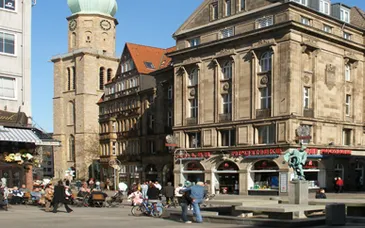
Once the beating heart of Germany's coal-and-steel industry, Dortmund has reinvented itself into a dynamic city-break destination where industrial heritage meets contemporary culture and world-class football. From the thunderous atmosphere of Signal Iduna Park to the serene expanse of Westfalenpark, this Ruhr region gem delivers authentic experiences far removed from tourist-saturated itineraries. Combine cutting-edge museums housed in converted breweries, lush botanical gardens, and a centuries-old beer tradition, and you have a weekend escape equally suited to passionate supporters and discerning culture seekers. Register with Voyage Privé today to unlock exclusive hotel offers and curated packages that transform your Dortmund adventure into an unforgettable journey through one of Europe's most distinctive urban landscapes.

Positioned along the modern harbour district of Düsseldorf, this contemporary four-star property places guests within easy reach of both the Rhine promenade and rapid rail connections to Dortmund—just under an hour away. Stylish interiors blend comfort with functionality, while the hotel's waterfront setting offers panoramic views and proximity to Düsseldorf's thriving dining and nightlife scene. Ideal for travellers planning a twin-centre exploration of the Ruhr region, the Mercure delivers seamless access to business hubs, cultural attractions, and onward journeys throughout North Rhine-Westphalia. Its strategic location makes it an excellent base for those wishing to combine Dortmund's industrial heritage and football culture with Düsseldorf's cosmopolitan flair.
What we love: The harbourside setting bathes rooms in natural light and connects effortlessly to both cities' transport networks, making multi-destination itineraries simple and rewarding for discerning guests.

Dortmund stands apart as a testament to the Ruhr region's remarkable metamorphosis from Europe's industrial powerhouse into a vibrant hub of culture, innovation, and leisure. Where collieries and blast furnaces once defined the skyline, award-winning museums, green boulevards, and contemporary art spaces now flourish. Landmark sites such as the Zeche Zollern colliery museum preserve this storied past, inviting visitors to walk through meticulously restored engine rooms and miners' quarters that tell the human story behind decades of coal extraction. Meanwhile, cutting-edge galleries and performance venues—many housed within repurposed industrial shells—demonstrate how thoughtful urban regeneration can honour history while embracing modernity. Unlike crowded traditional German destinations, Dortmund offers an authentic, less-touristy atmosphere where local character remains intact and prices stay refreshingly accessible. This distinctive blend of heritage, innovation, and genuine community spirit positions Dortmund as a compelling alternative for travellers seeking substance over superficial sightseeing.
At the heart of Dortmund's appeal lies its passionate football culture, embodied by Borussia Dortmund and the iconic Signal Iduna Park—home to the legendary Yellow Wall, Europe's largest free-standing terrace, where 25,000 supporters create an atmosphere unmatched across the continent. Beyond match days, the city's green credentials shine through Westfalenpark, a sprawling landscape of themed gardens crowned by the Florian Tower, offering revolving-restaurant dining 220 metres above the ground, and Rombergpark, a botanical sanctuary where rare specimens and tranquil ponds provide respite from urban energy. Cultural enthusiasts gravitate toward Dortmund U, a converted brewery tower housing Museum Ostwall's contemporary art collections and a rooftop platform with sweeping city vistas, alongside the historic Reinoldikirche, whose Gothic spire has anchored the old town for centuries. Dortmund's brewing heritage remains alive in traditional brewpubs serving locally crafted lagers, while seasonal highlights—notably the vast Christmas market on Hansaplatz, complete with a towering fir and ice-skating rink—add festive magic to winter visits.

Even on non-match days, Signal Iduna Park captivates with stadium tours that grant behind-the-scenes access to dressing rooms, the players' tunnel, and pitch-side perspectives of the famed Südtribüne—the Yellow Wall—where the roar of 80,000 fans reverberates through steel and concrete. Tours reveal trophy cabinets, historical exhibits, and anecdotes from decades of Bundesliga glory, making them essential for supporters and casual visitors alike. Match-day attendance elevates the experience to unforgettable heights: the choreographed chants, flares, and unwavering passion transform football into theatre. Securing tickets demands diligence—purchase only through the official Borussia Dortmund website or the box office at the stadium to avoid scams, counterfeit passes, and entry refusal that plague unofficial resale platforms. High-demand fixtures sell out weeks in advance, so early booking and, where necessary, membership or hospitality packages offer the best chance of securing entry. Reaching the venue proves straightforward via the U-Bahn, with the U45 and U49 lines stopping directly at Signal Iduna Park station, ensuring a seamless pre-match journey.
Dortmund U commands attention as the centrepiece of the city's cultural quarter—a six-storey former brewery transformed into a beacon of contemporary art and creativity. Inside, Museum Ostwall showcases rotating exhibitions of modern and contemporary works, from German Expressionism to cutting-edge installations, while creative studios and media labs occupy upper floors, fostering collaboration among artists, designers, and technologists. The rooftop viewing platform rewards visitors with panoramic cityscapes, particularly striking at sunset when industrial silhouettes soften into golden light. Nearby, the Museum für Kunst und Kulturgeschichte delves into regional art and social history, its collections spanning medieval altarpieces to 20th-century design. A short walk brings you to Reinoldikirche, the city's oldest church, where Gothic architecture and treasured relics anchor the historic market square. These attractions cluster within an easily navigable area, allowing a rich cultural afternoon on foot or via a brief tram ride, blending industrial architecture with world-class exhibitions in a uniquely accessible urban environment.

Westfalenpark unfolds across 70 hectares of meticulously landscaped terrain, featuring thematic gardens, a renowned rose garden boasting thousands of blooms, playgrounds for families, and the towering Florian Tower—a 220-metre television mast whose observation deck and revolving restaurant deliver sweeping views over Dortmund and the surrounding Ruhrgebiet. Picnickers spread blankets beneath mature trees, joggers trace lakeside paths, and seasonal events—from open-air concerts to horticultural exhibitions—animate the space throughout the year. For a quieter retreat, Rombergpark offers 65 hectares of botanical wonder, home to rare tree species, serene ponds, and winding pathways designed for contemplation and discovery. Arboretum sections display specimens from across continents, while glasshouses shelter tropical and subtropical plants. Both parks connect effortlessly via public transport—Westfalenpark via the U47 line, Rombergpark by bus or a leisurely cycle—and provide refreshing counterpoints to museum visits and urban exploration, proving that Dortmund balances industrial heritage with abundant green space.
Arrive early to maximise a single day, beginning at Dortmund U where contemporary art and the rooftop viewing platform set the tone for cultural discovery. Mid-morning, stroll through the compact city centre, pausing at Reinoldikirche and the bustling market square where traditional facades frame cafés and boutiques. Lunch calls for hearty German fare at a local brewpub—sample bratwurst, schnitzel, and a crisp Dortmunder lager brewed on-site. Afternoon options diverge: culture seekers can linger at Museum Ostwall or explore Westfalenpark for a leisurely walk culminating in a Florian Tower ascent, while football devotees opt for a Signal Iduna Park stadium tour, absorbing the legend of the Yellow Wall. Evening unfolds in the Kreuzviertel neighbourhood, where tree-lined streets host independent restaurants, wine bars, and live-music venues. Dortmund's compact layout and pedestrian-friendly centre make sightseeing on foot a pleasure, supplemented by day tickets for trams and U-Bahn that cover unlimited travel. For longer stays or twin-centre adventures, consider basing yourself in nearby Düsseldorf—exclusive hotel packages on Voyage Privé offer seamless rail connections and premium comfort.

A weekend allows deeper immersion in Dortmund's multifaceted character. Day one begins with check-in, followed by exploration of the city centre—Reinoldikirche, Alter Markt, and artisan shops—before an afternoon at Dortmund U, where rooftop vistas and contemporary exhibitions captivate. Evening brings traditional brewery-restaurant dining, savouring regional specialities and locally brewed pilsner. Day two opens with a morning in Westfalenpark or the botanical tranquillity of Rombergpark, then pivots to a Signal Iduna Park stadium tour or, if the Bundesliga calendar aligns, attendance at a Borussia Dortmund home fixture—the electric atmosphere, coordinated chants, and sea of yellow scarves create memories that transcend sport. Post-match, join locals in pubs near the ground, where passion and camaraderie flow as freely as the beer. Day three offers flexibility: a morning excursion to Zeche Zollern industrial museum reveals the human stories behind the Ruhr region's mining legacy, or a leisurely browse through Kreuzviertel's cafés and vintage boutiques provides a gentler prelude to departure. This pace balances activity with relaxation, ensuring time to absorb local life and beer culture. Extend your Ruhr region adventure with a stay at the Mercure Hotel Düsseldorf Hafen, positioned just an hour by train.
Families find Westfalenpark irresistible, with playgrounds, mini-golf, pedal-boat hire, and the Florian Tower's observation deck thrilling younger visitors. Zoo Dortmund introduces children to diverse species in naturalistic enclosures, while the DASA Working World Exhibition transforms labour history into interactive fun—kids operate machinery, explore ergonomic design, and discover how work has evolved over centuries. Family-friendly restaurants across the city cater to varied tastes and budgets, ensuring stress-free dining. During late November through December, Dortmund transforms into a winter wonderland centred on Hansaplatz, where one of Germany's largest Christmas markets unfolds beneath a 45-metre fir adorned with thousands of lights. Stalls brim with handcrafted ornaments, roasted almonds, and steaming mugs of mulled wine, while an ice-skating rink and carousel entertain families. Live choirs and brass bands add festive soundtrack to evenings spent wandering illuminated lanes. This seasonal charm elevates Dortmund into an especially cosy winter city-break choice, blending tradition, family entertainment, and magical atmosphere that appeals across generations.

Dortmund Airport (DTM), a compact facility 10 kilometres east of the city, welcomes budget carriers offering direct flights from several UK airports—Wizz Air and Ryanair operate seasonal and year-round routes, though schedules vary, so consult airline websites for current connections. Flight time hovers around 90 minutes, and ground transfers prove swift: the AirportExpress bus links the terminal to Dortmund Hauptbahnhof in 20 minutes, while taxis complete the journey in similar time. Alternatively, fly into Düsseldorf Airport (DUS), a larger international hub with broader connectivity, then board a direct train to Dortmund Hauptbahnhof—services depart frequently and cover the 70-kilometre journey in under an hour, offering a comfortable, scenic introduction to the Ruhr region. Dortmund also enjoys excellent rail connections across Germany and beyond, with high-speed ICE and Intercity services linking to Berlin, Munich, Frankfurt, and Cologne, the latter providing onward Eurostar connections to London. This multi-modal accessibility ensures flexibility for travellers prioritising convenience, cost, or environmental considerations.
Navigating Dortmund proves effortless thanks to an efficient, integrated public transport network operated by DSW21, encompassing U-Bahn metro lines, trams, and buses that blanket the city and suburbs. Day tickets and group passes deliver unlimited travel at excellent value—purchase from ticket machines at stations, on board, or via the DSW21 mobile app, which also provides real-time journey planning. The city centre remains compact and pedestrian-friendly, with Dortmund U, Reinoldikirche, shopping arcades, and dining precincts clustered within a 15-minute walk of Hauptbahnhof. For attractions further afield—Signal Iduna Park (U45/U49 lines), Westfalenpark (U47), or Rombergpark (bus routes)—the U-Bahn delivers swift, reliable connections. Cycling enthusiasts can hire bikes through the metropolradruhr scheme, with docking stations dotted across the city, ideal for exploring green corridors and riverside paths. Even first-time visitors navigate confidently, aided by clear signage, English-language announcements, and helpful locals, ensuring that logistics never overshadow the pleasure of discovery.

Spring (April through June) and early autumn (September to October) offer mild temperatures, blooming parks, and fewer crowds, creating ideal conditions for sightseeing and outdoor pursuits. Summer (July and August) brings warmth and extended daylight, perfect for beer-garden afternoons and open-air concerts, though occasional rain showers warrant a waterproof jacket. Winter (November through December) turns chilly but rewards visitors with the enchantment of Christmas markets, particularly the sprawling spectacle on Hansaplatz, where festive lights and seasonal treats compensate for brisk weather. Football fans should align visits with Borussia Dortmund's home fixtures—the Bundesliga season runs from August through May, with winter breaks in late December and January—and consult the official fixture calendar early to book match tickets before they sell out. Packing essentials include comfortable walking shoes suited to cobblestones and park paths, layered clothing to adapt to variable weather, and a versatile waterproof jacket year-round. Winter travellers require warm coats, hats, gloves, and sturdy boots for navigating icy pavements. Dortmund welcomes visitors in every season, each offering distinct charms and experiences tailored to diverse interests.
Dortmund ranks as an excellent, underrated city-break choice blending industrial heritage, vibrant football culture centred on Borussia Dortmund, impressive parks, quality museums, and an authentic local atmosphere. It suits football fans, culture seekers, and families equally. Less crowded and more affordable than traditional German destinations like Munich or Berlin, Dortmund delivers a genuine, off-the-beaten-path experience where local character thrives and prices remain accessible, offering substance over superficial sightseeing.
Yes, several UK airports offer direct flights to Dortmund Airport (DTM) via budget carriers such as Wizz Air and Ryanair, though routes vary by season—check current schedules. Flight time typically runs around 90 minutes. Alternatively, fly into Düsseldorf Airport (larger, more frequent connections) and take a direct train to Dortmund in under an hour. Both options prove convenient and affordable for travellers.
Must-see sights include Signal Iduna Park for stadium tours and match-day experiences, Dortmund U and Museum Ostwall for contemporary art and city views, Westfalenpark featuring the Florian Tower and rose gardens, Rombergpark botanical gardens, the historic Reinoldikirche, Zeche Zollern industrial heritage museum, and the seasonal Christmas market on Hansaplatz. Dortmund balances culture, green spaces, and football in a compact, accessible city ideal for short breaks.
One day covers core highlights—Dortmund U, city centre, Westfalenpark or stadium tour—but two to three days allow a richer experience, with time for a football match, deeper cultural exploration, day trips such as Zeche Zollern, and savouring local food and beer culture. A weekend (two to three days) proves ideal for a relaxed, well-rounded city break that captures Dortmund's diverse character.
Purchase tickets only through official channels: Borussia Dortmund's official website or the box office at Signal Iduna Park. Avoid unofficial resale sites and third-party sellers—they carry risks of fraud, invalid tickets, and entry refusal. Tickets for popular matches sell out quickly, so book well in advance. Membership or hospitality packages may offer better availability. Planning ahead ensures an authentic, safe match-day experience.